Saturday, 17 July 2010

Making and breaking worlds

Sam Sykes, author of Tome of the Undergates and Angriest Man Alive, has nailed me to a cross and raised me up as a banner in his new post on worldbuilding (and there was me thinking I felt rough this morning due to last night's alcohol intake).

It's an interesting post, which asks how the question "how are authors meant to go about worldbuilding?"
"We’ve seen excellent examples of it. George R.R. Martin’s A Song of Ice and Fire is set in the midst of high-rolling, power-playing nobles with grudges and ambitions that affect the whole world and this lends it an excellent reason to explore the vast and detailed world he’s created. Scott Lynch’s The Lies of Locke Lamora revolves around a city that’s basically its own character, and we’re just as happy to know it as we are to know Locke and Jean.
And we’ve also seen poorer examples. Some people will decry The Wheel of Time series for its encyclopedic references to things that don’t affect the story (while others embrace the series just for that). And there’s always going to be those who point to a new book and say: “He’s no Tolkien.”
Worldbuilding can be quite a divisive topic in the online genre community - you only have to look at the fall-out from M. John Harrison's infamous "clomping foot of nerdism" dismissal to see that.

I'm not interested here in discussing the importance of it all, as that topic has been done to death. I just thought I'd give some brief thoughts on what I like to see in a novel in terms of worldbuilding.

Despite often calling some authors' worlds bland and derivative, I'm not looking for something utterly mind-blowing and unique (which is just as well, because you very rarely see examples of that). But I do like to see something a little bit different, because after all there's no real limits with fantasy and it's nice to see authors taking advantage of this. Yet at the same time I like a world to have a certain degree of familiarity - I don't want it to be so unusual that I'm struggling to put it in context or understand it (because that then can detract from my enjoyment of the novel).

This reasoning - my desire for a world that feels familiar, yet fresh at the same time - explains why I like the worlds that feature in John Marco's Tyrants and Kings trilogy, Adrian Tchaikovsky's Shadows of the Apt series, and Mark Charan Newton's Legends of the Red Sun series.

Marco took a familiar world of knights and castles, but threw flame-throwers and acid-launchers into the mix. He made his capital city an industrial hellhole where smoke billows from the chimneys of countless factories that are constantly developing new war machines. The result is that intriguing mix of the familiar and fresh that I'm looking for. His trilogy is unmistakably epic fantasy, just with a different sheen.

The same sort of balance has been achieved by Tchaikovsky and Newton: both have created worlds that on the surface appear familiar, yet scratch beneath that and you find something a little different (people with insect characteristics and abilities in Tchaikovsky's case, a dying world of misunderstood technology and bizarre creatures in Newton's).

The application is just as important as the end product. I don't want to be bombarded with countless names and references to the world's history, as without some sort of context they're meaningless. Sentences like "The palace was an exquisite fusion of architectural styles: turrets from REGION X, battlements reminiscent of PLACE Y, and spires in the image of LOCATION Z" just don't work effectively if there's been no previous mention of these places. You can't evoke a sense of place just by pulling names out of a hat. It's a cheap, unsubtle way of saying, "Hey, my world is really big and has all these exotic places in it." Yeah? Well tossing names about isn't really demonstrating that.

The old adage of "show, don't tell," to my mind is far more pertinent to worldbuilding than characterisation. I want to see the world through the eyes of the characters, not be told about it in long passages of exposition. I think the best worldbuilding is achieved through little glimpses and minor touches, rather than chunks of exposition.

Look at this example:

At some distance on, he passed the disaggregated body of one of his Night Guard - and could tell it was Voren by the elaborate bow cast to one side. Doglike black gheels lingered around the corpse, their triple tongues and double sets of eyes shifting in rhythmic twitches around the wound, in a ritual as old as the land itself. 

The above snippet is from Mark Charan Newton's Nights of Villjamur. Look at how there's no needless exposition. Newton doesn't bash the reader over the head with unnecessary information about the gheels: what they are, where they come from, and so on. We just see them. They just happen. And in three lines Newton's shown us a glimpse of his world and given it a shade of intrigue.

Now look at this example:

Suddenly I heard a menacing growl behind me...I turned my head and there was a garrinch, devouring me with the insane glare of its white eyes. 
Garrinches live far away in the south, in the Steppes of Ungava, almost on the borders of the hot Sultante. The creatures are magnificent watchdogs, especially useful against lads like me. Getting hold of a live garrinch cub is incredibly difficult, almost impossible, because the price is simply sky-high. They say the king's treasure house is guarded by two of the beasts. 
What a garrinch resembles most of all is a huge rat, the size of a well-fattened calf, covered with snakes' scales instead of fur, with a magnificent set of teeth that can saw straight through a knight in armour, and two white gimlets for eyes. Killing one is extremely difficult - unless, of course, you happen to be a magician. 
The ceature snorted and stared alertly...

That snippet is from Alexey Pehov's Shadow Prowler. It's the polar opposite of Newton's approach: Pehov reels of a load of tripe about where the creatures come from, how hard they are to kill, what they look like, and so on. Who cares? I don't. Anyway, much of this information could be made apparent by the character's confrontation with the beast - showing us, rather than telling us. Worse, he throws a couple of meaningless place names into the mix. Worse still, the long passage of dull exposition breaks the tension of the scene; the worldbuilding gets in the way of the story, and that just can't be allowed to happen.

A little bit of subtlety goes a long way.

This was meant to be a brief post and somehow it's morphed into a bit of a monster. Oh well. I guess what I'm trying to say is that I consider good worldbuilding to be where an author mixes intrigue and freshness with familiarity, and reveals the depth and dynamics of their world in glimpses rather than regurgitating chunks of their world's history that they've ripped straight from their notes. And perhaps most importantly, reveals their world without interrupting the story. Because ultimately the story should be about people, not the world they're in, although they do of course have a symbiotic relationship.

Friday, 16 July 2010

Book review: Tome of the Undergates

Tome of the Undergates

By Sam Sykes

(Gollancz, 15 April 2010)

Tome of the Undergates does not open with a 200-page battle scene - let's get that clear right from the start. It's a criticism and accusation I've seen levelled at the novel in various reviews, and it's misleading. Yes, the book opens with a pretty huge brawl that only gets bigger as it progresses. Yes, the duration of the battle does last for around 200 or so pages. But it's not 200 pages of pure carnage; the battle ebbs and flows, with various breaks where other events unfold, and at times the battle rages in the background while scenes of rather different natures play out.

It might seem strange to start this review by making the above distinction, but I feel it's important the point is made - debut authors have a tough enough time as it is without having to sit there and helplessly watch as inaccurate statements about their novel are bandied around the interwebs.

The other primary criticism I've seen levelled at Tome of the Undergates - that its characters bicker and snipe at each other incessantly, to the point that it becomes tiresome - is much harder to face down, mainly because it's largely true. The first part at least: whether the constant arguing becomes tiresome is down to personal opinion.

There's no doubt that Sykes has created quite a colourful bunch of misfits - and misfits is exactly what they are: a small, silver-haired swordsman that hears voices; a snarling, wild Shict (think a female elf pumped full of steroids and you're halfway there), a red-skinned dragonman with a hedonistic lust for violence; a wise-talking rogue of dubious loyalty and even more dubious courage; a scrawny wizard with an alarming habit of setting people on fire (accidentally, much of the time), and a pious, slightly snobbish healer who can't help feel she should drop her bandages, pick up a sword and kick some ass like the rest of her companions.

Such a diverse group of individuals, with their various prejudices, beliefs and abilities, should be the driving force of the novel - and for much of the time they are. There's no doubt that when they're fighting (the enemy, as opposed to each other) they're capable of dealing out some serious damage, and their diverse natures create plenty of scope for the sniping and bickering that constantly breaks out between them, allowing for a number of amusing moments.

Yet the problem is that their backgrounds just aren't explored nearly enough to engage the reader's interest and empathy. There are hints here and there - flashes of traumatic events in their respective pasts that have set them on this adventuring road - but it's just not enough to build them into the three-dimensional figures they need to be. Fortunately the last fifty or so pages of the book goes some way towards rectifying this, but by then it's a little too late. The result is that - for all their dynamism and distinctiveness - for much of the book some of the characters feel a little hollow. Of course, Tome is the first novel in a series, so we can't expect every single revelation to be spilled. But a lot more was needed in this first installment. And with more regularity as well: having one brief glimpse at a backstory in the first third, then having a more significant one at the end isn't enough, and detracts from the desired emotional effect.

That's not to say that Sykes' charactersation is bad, as it's not. As mentioned, the protagonists are distinctive individuals, and he builds some believable relationships between them: the dynamic that exists between Lenk and Kataria is particularly well-wrought. But in the same way their backstories are reduced to unsatisfying glimpses, the same is often true of the characters' traits. Denaos has a lovely wit about him - and, you sense, a hint of self-loathing - but we don't see either of them often enough. Likewise, Gariath - who spends most of the novel rampaging about and cracking skulls - displays a quite poignant sense of anguish in the book's closing chapters, that adds a totally different dimension to his character. It's just a shame we didn't see a bit more of this facet to his personality throughout the book. An attempt is made to explore Asper's sense of inadequacy, and proves mostly unsuccessful until a major revelation is revealed without much prior warning - the result being pleasingly enlightening, if rather clumsily handled. Other characters however - Dreadaleon being the chief culprit - feel rather underdeveloped.

Another problem is the setting: the first 450 pages of the novel take place on a ship and then an island. With many novels, the scene changes with the POV character. But as Sykes' POV characters are all in the same place, it means there's no variety in the scenery. Subsequently, no matter how hot the action gets, it starts to feel rather stale at times - too much exposure to the same environment.

This problem isn't helped by the rather linear plot, which sees the adventurers setting off to retrieve an artifact that was stolen from their employer. It's a storyline that goes from A to B to C without much deviation, and the lack of a subplot is at times rather glaringly obvious. There's no shortage of action, yet this in itself is often a problem: the lack of intrigue and depth sometimes makes it a bit of a slog at times, a problem made worse by some rather protracted dialogue and the regular backbiting between the companions (which for the most part I didn't have an issue with, and actually found amusing at times, though admittedly it did grate eventually). The novel's pace also sags in the middle third, which doesn't help matters.

The element that surprised me the most was the humour - or rather, the way it often didn't hit the target. I follow Sam Sykes on Twitter, and he's funny. Very funny. And this sense of humour certainly manifests itself in Tome of the Undergates - there are some very amusing one-liners, and some entertaining scenes. But like the characterisation and plot, it's just too inconsistent. Too often the attempts at humour fall flat, which is a real shame.

Yet despite all the above, there's something likable about Tome of the Undergates, and plenty of reasons why this is so.

For a start, Sykes can write good battle scenes - he has an eye for detail and a penchant for the dramatic, and uses both to admirable effect. His prose is perfect for the type of story he's telling, being both swift and precise. While worldbuilding as a whole is on the light side, the elements that Sykes does focus on are handled well, and are very intriguing in their oceanic nature. There's plenty of cool monsters too - most notably the Abysmyths, for which Sykes researched marine life and biology. His efforts paid off.

The most pleasing aspect of the novel is easily the final third, when a new faction enters the fray and the action really hots up. These newcomers add some vital depth to the story; it's the first indication that Sykes has clearly got something much bigger in mind than the linear story that dominates much of the first two-thirds of this book. The netherlings are a striking race with a curious hierarchy, and their involvement in events bodes well for the next installment in the Aeons' Gate series.

Verdict: Tome of the Undergates is a flawed diamond. A very flawed diamond. There are numerous issues with characterisation, pacing and plotting. At times it feels hollow, at others it feels uncomfortable bloated. Yet there are enough signs to confirm that Sykes has potential. The battles are handled well, the mythology and creatures of his world are intriguing, and the more positive elements of his characterisation - the dynamics that define the relationship between Lenk and Kataria, and the flashes of depth in many of his protagonists that we see towards the end - are very promising. As is the ending, which hints that there's a lot more to come from Sykes. If he can refine his characters (lessen the backbiting, sharpen the humour, and develop their backstories) and conjure up a more dynamic plot with more depth, then he  could well be on to a winner. 

Thursday, 15 July 2010

Artwork for Adrian Tchaikovsky's 'The Sea Watch'

Courtesy of Tor UK editor Julie Crisp:


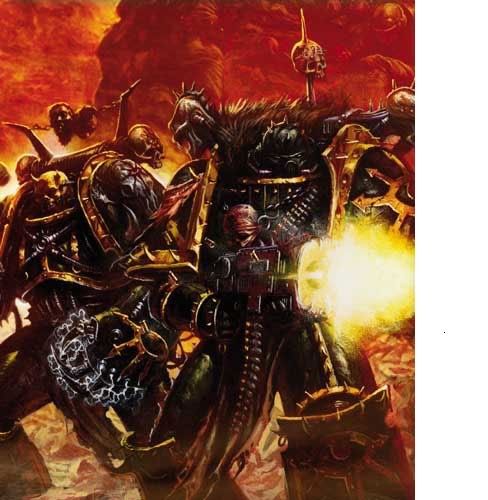
Gorgeous cover by Jon Sullivan - love the colour scheme. The central figure actually reminds me of the chaos space marines from Warhammer 40,000...

Sunday, 11 July 2010

Rough online preview chapters - good or bad idea?

This is something I've been wondering for a while now, and I'm interested to see what others think.

Some time ago I read the opening chapter of Blake Charlton's Spellwright on his website. It was a rough version that - I think - was unedited.

I didn't think much of it at all, and decided largely on the basis of this rough chapter that the book wasn't for me.

Fast forward a few months, and I chance upon a hardback copy of Spellwright in my local bookstore. So I picked it up and scanned the first few paragraphs to remind myself why I didn't like the opening chapter.

Instead I found myself thinking, "Hmm, actually...this isn't bad at all."

Obviously, the chapter I read in the bookshop was the finished version - it had gone through the extensive editing process, and had been polished, polished, and then polished some more.

The result was that I changed my mind and decided that maybe I would give Spellwright a shot after all.

So the question I'm asking is this: is it a good idea for an author to post up rough, unedited sample chapters of their debut novel on their website? It's a trait I'm starting to see more and more of, yet I question its value.

Based on my own experience, I'd have to say no. It's very hard for debut authors to make a significant impact - for every debut that causes a buzz, there are a dozen that barely cause a ripple. Why make it harder for yourself by showing everyone your rough, unpolished prose?

I suppose the counter argument is that perhaps a lot of readers will like the sample chapters, and they act as a sneak preview sort of thing, which some readers appreciate - and this may even help create some buzz. But for people like me, for whom strong, stylish prose is highly desirable, it has the opposite effect. I don't really like the majority of writers' polished prose, so showing me your rough version is not really advised.

There are certainly two sides to this argument, and I'm interested to see which side people fall on.

Saturday, 10 July 2010

Predators

Despite only being four years old when it was released in 1987, I've always been a big fan of the action/horror film Predator - there's something eternally enjoyable about watching a team of battle-hardened, crack commandos slowly crumbling under the pressure of being stalked by an unseen enemy that always seems one step ahead of them. Of course, the fact that the script was packed with great one-liners ("There's something out there waiting for us...and it ain't no man") and had a seriously cool alien antagonist certainly helped.

The inevitable sequel followed in 1991, though pleasingly it was a worthy follow-up. It didn't match the first film, but nonetheless it was an enjoyable romp and further developed the alien predators, providing a more substantial glimpse of the creatures' culture and their strange codes of honour (not to mention throwing in the odd geek reference, like the alien skull in the predators' spaceship).

Frustratingly, despite the potential scope for further films (the first two movies barely scratch the surface of predator culture) the pickings for fans of the franchise over the next twenty years were slim indeed: the painfully mediocre Aliens Vs Predator in 2004 and the laughably terrible Aliens Vs Predator: Requiem in 2007 offered next to nothing in terms of further development of the species.

But in Predators, fans of the franchise have finally got a film worthy of the two original movies.

Like its predecessors, the new installment in the series has a simple premise: seven strangers from a variety of backgrounds (mostly military) find themselves on an alien world with no idea of how they got there, or why. When it swiftly becomes apparent that something is hunting them, they're forced to work together in order to try and survive. Naturally, all sorts of mayhem ensues.

Predators has been called a 'reboot' of the series, and while I'm not overly keen on the term, it's certainly true in the sense that this film takes the franchise back to its roots - hunters and hunted, locked in a desperate struggle in a jungle environment. This is one of the most pleasing aspects about Predators: that it pays homage to the first film in a number of ways (the music and sound effects are deliberately very reminiscent of the original movie, while certain lines of dialogue are also borrowed - as is one entire scene which is clearly a nod to a moment in Predator).

One of Predator's strengths was the focus it placed on characterisation, and the same is true of this new installment. Although the results are admittedly somewhat mixed, there's enough depth here for the watcher to engage with. Adrien Brody - somewhat surprisingly, it must be said - is convincing as the brooding mercenary Royce, as is Alice Braga as an Israeli sharpshooter. There perhaps could have been more character development - the individuals' backstories are barely touched on - but of course this would have had to have been balanced against the film's pace, and the filmmakers have clearly plumped for pace and action, which is hard to argue with.

The predators of course, are the stars of the show: they've been given a 21st-century makeover, and are as fearsome as ever. The unnerving way they shimmer in and out of visibility never gets old, while the mask-and-dreadlocks image is as cool as ever. There's no serious revelations about them or their culture, but there are hints here and there - such as the fact that they sometimes turn on their own kind, which has never been alluded to before.

There are flaws of course; the dialogue is occasionally stiff and lacks the quotability of the original film (though it does have its moments), the plot itself isn't much of a departure from the film's predecessors (and is one of those plots you can pick holes in if you want to),  and you can't help but feel that more could have been done with this bunch of misfits in terms of character development. Yet this is an action film, and to be fair it does the action part pretty darn well - there's plenty of exciting sequences, one or two twists, and overall it's a lot of fun.

And as always, the predators are very, very cool.

Wednesday, 7 July 2010

Malazan re-read at Tor.com

I've read both Steven Erikson's Gardens of the Moon and Deadhouse Gates, as well as Ian Cameron Esslemont's Night of Knives, but decided some time ago to wait until the Malazan Book of the Fallen series was complete before going back and reading all ten novels (I was contemplating reading them all back-to-back, but given their size and my reading speed, that might not be so advisable...).

Interestingly, Tor.com have had a similar idea. Here's a press release I received earlier today:
"Calling all Malaz fans!! In a few minutes, Tor.com will launch the epic fantasy re-read of the novels by Steven Erikson and Ian C. Esslemont’s in their co-created Malazan Empire world. Modeled after Leigh Butler’s fabulous Wheel of Time re-read, capable bloggers and fantasy critics Bill Capossere and Amanda Rutter (FantasyLiterature.com) will reintroduce Whiskeyjack, Anomander Rake, Quick Ben, Kalam Mekhar, Fiddler, Iskaral Pust, and all the other great characters from this dark and complex fantasy world, a few chapters at a time. And with the completion of each book in the re-read, Steven Erikson and Ian C. Esslemont will weigh in with their reactions to the posts, comments, ideas, and theories of the fans and bloggers."
Sounds pretty cool, no? Should be interesting to see not just what Bill and Amanda think about the books, but also how Erikson and Esslemont respond to the points they raise.

There's already a hefty introductory post up, which provides more detailed on how the whole gig is going to work, while the first entry in the series - examining the prologue and first chapter of the excellent Gardens of the Moon - has also been posted, and has already generated some debate.

I'll certainly be following this undertaking (well, for the first two books anyway), as it could throw up some really interesting points for further discussion.

Best of luck to Bill and Amanda in this epic undertaking...

Friday, 2 July 2010

Artwork for 'Corvus' and 'The Kings of Morning' by Paul Kearney

I very much enjoyed Paul Kearney's The Ten Thousand, so figured I'd post the artwork for the upcoming books in the same series: Corvus and The Kings of the Morning. I'm glad that Paul decided to pen more novels in the world of the Macht, as I got the feeling that The Ten Thousand only scratched the surface of this exotic place.

Here's the cover for Corvus.


And the cover for The Kings of Morning.


I like these covers a lot, they have a rather historical feel to them, and the colour tones are suitably moody. They're also in keeping with the style of the first book, which is obviously good for continuity.

Corvus is due out in October 2010. There's no listing on Amazon yet for The Kings of Morning, though the walking storehouse of genre knowledge that is Werthead has suggested it will follow in July 2011 (thanks also to Wert for the heads-up about the Kings of Morning artwork).

Actually, while I think of it, Wert has got a good write-up on the other Kearney releases that are currently in the works (Kearney's got a lot of stuff currently on the go, which is great news for the genre, as Paul doesn't always get the exposure he deserves).

Thursday, 1 July 2010

Various author updates

I've still not got around to reading Adrian Tchaikovsky's Salute the Dark, but I'm going to have to get a move on or risk being left behind - the Shadows of the Apt series is really steaming ahead: Tchaikovsky has  confirmed that book five - The Scarab Path - has been completed. The book is on course for its 6 August 2010 release date.

He's also confirmed the title for book six - The Sea Watch - and that he's completed the first round of edits on the book, while book seven - currently untitled - has been sent to his agent for preliminary reading. Book eight is tentatively titled The Air War.

Readers often complain about the delay between books, but that's certainly not an issue with Tachikovsky's series: each installment has so far been released only six months apart, which builds great momentum. If you've not checked out the series yet, then do so. Very good epic fantasy that has been described as "World War II meets Ancient Greece. With insects." Check it out.

George R. R. Martin recently gave a brief update on A Dance With Dragons. The novel - already longer than the second installment, A Clash of Kings, has been shortened slightly with the removal of a couple of chapters and their subsequent redeployment to the next book, The Winds of Winter. This of course has necessitated some structural tweaking, though this allegedly has been very minor. The removal of these chapters makes Dance four chapters shorter (the two chapters that have been removed, plus two further chapters that no longer need to be written for this novel).

Slowly, the long-awaited Dance is inching towards the finish line. It looks pretty likely that it'll be finished this year, though lets not even start talking about publication dates.

Meanwhile, auditions for the green-lit HBO production of Game of Thrones continue apace:

"The auditions for the part of Ser Ilyn Payne are the strangest I've even been witness to. Ser Ilyn has no tongue and no lines, of course, so the actors just have to stand there and look mean & scary, reacting to the dialogue of other characters being read to them by the casting assistants. No words to work with, just their mouth, eyes, facial expressions. Talk about challenging."

Joe Abercrombie has confirmed that he's currently on the third draft of upcoming novel The Heroes:

"I feel as if the central characters are all working pretty well, their stories making sense and binding nicely together, but there’s still a fair bit of work to do. I’m already some way into the third draft, or the second round of editing, in which I’m addressing some character points that my editor has brought up, taking a look at a few scenes that aren’t working as well as they might, and trying to add some detail to the setting. I suppose you could call it worldbuilding, though not of the, “I shall destroy thee, as king Zanvonzulus the Fifth did the Smejians at the Battle of Saphontes Heights bringing the Third Flidgian War to a victorious close after seventeen years of fighting in the year three thousand seven hundred and twenty two by the Brapfistic Reckoning, varlet!” but hopefully of a more subtle type."

At the moment a January 2011 release is plausible. I'm quite interested in this book, since I really enjoyed Abercrombie's first trilogy but was left, um, cold by Best Served Cold. I've got a feeling The Heroes will be more to my liking though, but we'll have to see. No UK artwork as of yet, though hopefully it'll be better that the US cover (above left), which doesn't do much for me at all.

Richard Morgan has commented previously that he was having a bit of difficulty with writing the follow-up to The Steel Remains, but it seems he's now back on track. A tentative publication date of 11 April 2011 has been set, which means the book will have to be turned in by late Autumn. In Morgan's own words:

"I’m actually starting to inch forward in the narrative, and I have – possibly a side effect of writing a lot of game and tie-in comic-book treatments recently – a clearer overall idea of where the book will go than at any time in the last two years. It may take a while to get there, but at least I have a map. And the good news is that, looking at that map, it seems me this book is likely to be a good deal longer than The Steel Remains; so if you liked Ringil and Co’s first outing, there should be about half as much again to like this time around."

As has been endlessly commented on previously, The Steel Remains was burdened with a huge amount of hype/buzz/whatever, which probably didn't do it many favours, at least from a critical perspective. The Cold Commands - the novel looks like it's moving back to the original title, from The Dark Commands - will most likely bring less baggage, and will probably be all the better off for it. I enjoyed The Steel Remains, so am interested to see what direction the story goes in. No UK artwork yet, but the US cover (above left) is pretty cool.

Tuesday, 29 June 2010

Book review: Shadow Prowler

Shadow Prowler

By Alexey Pehov

(Simon and Schuster, 1 April 2010)

Alexey Pehov, by all accounts, is something of a genre superstar in his Russian homeland. His books - which have sold over a million copies - have won various awards, and are among the most popular fantasy novels in Russia. His first book Shadow Prowler - known as Stealth in the Shadows in his native Russia - has been heralded (rather bizarrely) by X-Men creator Chris Claremont as "an exciting take on classical themes." According to Pehov's website, Shadow Prowler was sold to both Tor in the USA and Simon and Schuster in the UK, both in six-figure deals.

Not bad going for a book that allegedly began life as a piece of fanfiction based on the popular Thief video games series.

Then again, perhaps 'began life' is a spurious phrase - by all accounts Stealth in the Shadows was still fanfiction when it was published in Russia; the main character - a thief - was even called Garrett, which is the name of the protagonist from the Thief games. The protagonist's name was changed to 'Harold' when the book was picked up for US/UK publication (presumably for fear of a lawsuit), though amusingly they didn't quite manage to eradicate all the references to his former name: on page 374 of Shadow Prowler, Harold is referred to by another character as 'Garrett' - a jarring reminder of the novel's dubious origins.

Still, to judge any book based on its background is to do it a disservice; as we all know, you have to review the book itself, not the noise that comes with it.

So, Shadow Prowler. A book in which the RELUCTANT HERO™ - a thief by the name of Garrett Shadow Harold - must embark on a DANGEROUS QUEST™ to retrieve the MAGICAL ARTIFACT™ in order to defeat the EVIL DARK LORD™ known as THE NAMELESS ONE™ who wants to DESTROY THE WORLD™.

You think I'm joking? I wish. I try not to be too sarcastic in reviews, but in this case I think I'm justified. It's no exaggeration to say that Shadow Prowler is probably the most derivative, clichéd fantasy novel I think I've ever read - and given some of the rubbish I've read in my time, that's saying something.

Honestly, the extent to which Pehov has just trotted out the same old tropes - not to mention ripped off other sources - is staggering.

Don't get me wrong; clichés are not necessarily a bad thing - they're clichés because they've been overused, and they've been overused because they're popular. There's nothing wrong with using them - so long as you do something different with them. You don't have to reinvent the wheel, just riff on a familiar trope and try and spin it in a different direction.

In Shadow Prowler, Pehov makes no such attempt to freshen up these overfamiliar tropes. And that's easily the novel's greatest failing: it just regurgitates the same old storyline that you've seen hundreds of times before and brings nothing new whatsoever. Oh sure, Pehov's dwarves don't have beards and his elves have fangs, but so what? These are merely token gestures that serve no purpose whatsoever and are classic examples of "change for change's sake" which is never a good thing. Regardless of their appearances, the dwarves and elves still act much as you'd expect them to.

As if this reliance on such a tired premise wasn't bad enough, Shadow Prowler is further undermined by what appears to be sheer laziness on Pehov's part when it comes to the history of his world, and the novel's backstory.

For example, we're told that the Nameless One (who was once called Grok, so he's not actually nameless at all) refused to aid his noble brother (who, bizarrely, is also called Grok) during a battle, and so was executed for treason. Except that we're not told why he failed to aid his brother. Apparently, "history is silent on that question." Indeed. Nor is a valid explanation offered for why the one artifact that can stop the Nameless One (who has somehow survived his execution, though that's not explained either) was hidden for 'safekeeping' in one of the most dangerous, hostile locations in the kingdom. Perhaps it's just me, but taking the one thing that can help you against your enemy and hiding it in a location that will be extremely difficult to recover it from, just strikes me as unbelievably stupid. Yet this is one of the fundamental problems with Shadow Prowler - so much of the backstory has clearly been devised to support the plot, leaving gaping holes in the novel's internal logic.

The laziness doesn't end there. Not content with falling back on the most clichéd premise in the epic fantasy genre, Pehov has also ripped much of his world's magic straight out of D&D: we have fireballs, we have one-use scrolls, we have fire- and cold-imbued crossbow bolts, and we have wizards that have to memorise spells before they can cast them. All lifted straight from the annals of D&D. It's brazen to the point of being appalling. Embarrassing, even.

The writing is no better. Admittedly, given that Shadow Prowler has been translated from Russian, it's hard to know how much of the prose's fluency has been lost in translation. The answer is either a hell of a lot, or that the writing was just poor in the first place. The actual prose is not that bad; it's rather stiff at times, but ultimately it's serviceable. Unfortunately Pehov has no idea how to handle exposition, with the result that the first few chapters of Shadow Prowler descend into a truly terrifying mess of info-dumps that completely ruin the flow of the narrative. Worse, Pehov feels the need to tell the reader everything about a particular creature when we meet it for the first time. So, Harold will find himself in a confrontation with a peculiar creature, but before the action can commence, we have to put up with several paragraphs giving us a brief run-down of the creature's habits and characteristics (get used to it, as this trait appears as early as the second page). It's painfully amateurish and only serves to suck whatever tension there is straight out of the scenes.

Shadow Prowler's plot offers little in the way of excitement. The first half of the book is set-the-scene stuff (quite literally; we have pages and pages of endless exposition) and also sees a rather odd sub-plot play out (which seems to have no apparent relevance to anything important). The second half witnesses Harold and his bunch of companions setting out on their venture, with a distinct lack of twists and turns on the way. There's a few incidents here and there, but for the most part it's all rather pedestrian and almost entirely lacking in excitement or tension. There's nothing interesting to be found in Pehov's world either. It's a depressingly bog-standard world of kings, wizards, orcs and elves. There's even a place called the 'Desolate Lands'. Well, the dark lord has got to live somewhere, right?

Characterisation is perhaps the one aspect where Pehov shows a glimmer of ability, and the likability of his characters was the only thing that kept me reading. Harold, as a protagonist, lacks depth and possesses no intriguing quirks or flaws. Yet he does possess a certain wry humour, and as the story is told in the first person, his narrative does inject a bit of lighthearted humour to the proceedings. The goblin jester Kli-Kli brings further humour; he's a genuinely amusing little fellow that is good fun to read about. The gnome and dwarf duo of Hallas and Deler, and their constant sniping, provides further entertainment.

There are other isolated flashes of Pehov's ability. The chapters of the novel set in the city's 'Forbidden Territory' are handled well and are vastly more interesting than anything else in the novel; Pehov can do tension and intrigue when he really tries. Furthermore, the 'flashback' chapters (depicting incidents that often happened hundreds of years before) are arguably the strongest in the book, and are written in third-person, which seems to suit Pehov much better. They're the only moments when the novel seems to get anywhere near to the quality you'd expect from a book that was sold for such high sums.

Speaking of the sums involved, I'm bemused by Simon and Schuster's decision to take this novel on. To my knowledge, they've not had a fantasy imprint since they closed down Earthlight, and this apparent lack of expertise appears painfully obvious with this particular deal. They've shown no understanding of the current state of the genre, and have offered a huge amount of money for the kind of novel that peddles a brand of fantasy that the genre has more or less left behind. Sure, no doubt some readers still go for this sort of thing, but if you look at the popular authors in the genre these days, none of them are writing this sort of book anymore.

Verdict: For the most part, Shadow Prowler is a mess of lazily-used clichés, uninspired worldbuilding, amateurish writing and linear plotting. Some relief is provided by a few of the more amusing characters, and now and again Pehov shows hints of genuine ability. Yet this isn't enough to save a novel that represents the end of the fantasy spectrum that the genre has thankfully been moving away from (in other words, sub-par, unimaginative Tolkien rip-offs). There's nothing new here. To some readers, that might be an attraction in itself. But even so, this is a story that has been told a million times - and far better than it is here. 

Thursday, 24 June 2010

The allure of the assassin

As I mentioned in my review of Jon Sprunk's Shadow's Son, it seems that assassins are becoming increasingly popular in epic fantasy these days. Of course, they've long been a staple of the genre: from Fritz Leiber's Fafhrd and the Gray Mouser stories (1939 onwards), to M. John Harrison's A Storm of Wings (1980, part of his wonderful Viriconium sequence), to the likes of Robin Hobb's Farseer trilogy (1990s) Steven Erikson's Malazan Book of the Fallen (1999 onwards). No doubt there's plenty of other examples; I can't claim to be well read enough to be able to give a definitive guide.

Yet it's only in recent years that we've really seen a growing emphasis on assassins as the main protagonists in fantasy novels, perhaps most notably with Brent Weeks' popular The Night Angel trilogy. Col Buchanan's Farlander and Jon Sprunk's Shadow's Son have quickly followed, while Jon Courtenay Grimwood's The Fallen Blade is in the works.

This growing emphasis on the assassin - and the apparent popularity of such characters - has led me to ponder a question - why? What is it about these shady figures that readers find so appealing?

Assassins kill people in cold blood - for money. In real life, there's nothing remotely glamourous about it; it's a despicable way of making a living. Yet assassins are rapidly becoming the rockstars of fantasy literature; there seems to be a certain glamour about the way they live their lives on the edge, dicing with death every other night.

So how come there's such a distinction between real life and literature? Rapists are treated the same way in fantasy books as they are in real life: with disgust and contempt. Yet assassination in the real world is a heinous crime, it's murder, yet in fantasy literature it's somehow acceptable - cool even.

So how come? It's a question that I can't really think of an answer for. What sort of odd psychology is at work, that makes it acceptable to root for characters that kill in cold blood? Often these assassin protagonists have experienced traumatic events earlier in their lives that have shaped them into what they have become (this is true of both Weeks' and Sprunk's characters) but is this enough to justify what they do? Does it even matter?

Food for thought. If you've got any opinions or theories on the subject, I'm very interested to hear them.

Tuesday, 22 June 2010

I am Legend: the darkest post-apocalyptic book ever written?

That's the question that's been asked over on the Orbit blog by Terry DeHart:
What is it about early postwar sci-fi that makes its worlds seem so dark and realistically shabby? Proximity to nuclear annihilation? The poorly forgotten horrors of World War Two? The rote mediocrity of peace after the time of global death and flame ended, the famished beginning of the age of mass consumption? Or is it only that we’ve been conditioned by the black-and-white movies of that time?
Whatever it is, Richard Matheson’s I AM LEGEND is shot through with it. This book is wonderfully dark. Neville drinks. He sweats and laughs and cooks and eats and cries and, in between bouts of near-insanity, he kills people. It seems as if killing is the most rational thing left to do. And Matheson puts the reader right there with him.
I'm not able to offer an answer as to whether I am Legend is the best post-apocalyptic book ever written (I'm not nearly well read enough to even begin considering that question) but having read Richard Matheson's famous novel I can certainly understand why it's considered to be a contender for this accolade.

Although I've only read I am Legend once, and that being several years ago, so many of the novel's scenes have stuck in my mind and even now I can recall them with clarity.

What I love most about this book is the psychology of it all, the way Robert Neville goes from being the hunter during the day to being the hunted at night. The desolation and loneliness of the urban landscape is wonderfully portrayed by Matheson, yet the sheer isolation and claustrophobia that he imbues Neville's nights with is even more striking and shocking. Imagining Robert Neville - the last man on Earth - sitting in his living room, drinking liquor and listening to classical music as the hordes of vampires shriek out his name and throw themselves against his defenses, is just such a powerful image - it speaks of both hope and hopelessness, determination and despair.

Matheson's prose is also wonderfully blunt, yet evocative. The opening sentence is one of the best I've ever read:
On those cloudy days, Robert Neville was never sure when sunset came, and sometimes they were in the streets before he could get back.
With that one line Matheson says so much: he reveals the significance of the sunset, the vulnerability of Neville in his inability to gauge it effectively, and of course the oppressive threat that he faces. One sentence, so much meaning. Brilliant.

I am Legend is available as part of the Gollancz Masterworks series, and if you've not read it - why not? - then you can pick it up for a fiver on Amazon.

Oh, and forget the recent film adaptation - it's total garbage and barely reflects the novel at all, let alone reflect its brilliance.

Monday, 21 June 2010

Book review: Shadow's Son

Shadow's Son

By Jon Sprunk

(Gollancz, 8 July 2010)

Assassins seem to be becoming the dominant figures in epic fantasy these days. While they don't yet have a stranglehold over the subgenre the way vampires do in the paranormal romance sector, they certainly appear to be in the ascendency. Brent Weeks' popular Night Angel trilogy arguably started the recent trend, which has been carried on by new authors Col Buchanan, in his debut novel Farlander, and now US debutant Jon Sprunk in his novel Shadow's Son.

The novel's protagonist is Caim, a freelance assassin working out of the city of Othir. After one particular assignment goes wrong, Caim realises he's been set up - and the only person who might be able to offer an explanation as to who is behind it all is the daughter of the man he was meant to kill. Unfortunately for Caim, this unknown enemy also want to get their hands on the daughter - Josie - for their own sinister reasons. Before long, Caim finds himself embroiled in a sinister game of conspiracy, with Othir's future as the stakes. If he is to stand any chance of survival, Caim is going to have to look inside himself and unleash the darkness that he has been holding back all these years...

The greatest asset of Shadow's Son is the sheer pace at which the story unfolds. The story rips along at speed, aided by short chapters and a pleasing lack of unnecessary detail or exposition. Furthermore, the plot is crafted well and enough hints are dropped throughout to keep the reader guessing, with the pay-off coming further down the line as various revelations come to light. Sprunk also manages to engineer one or two twists that keep things interesting.

The other elements of the novel are much more of a mixed bag.

Caim is a solid protagonist and - despite his profession - is easy to empathise with. His motivations are believable and partly drive both the plot and his personal development, while his background - and unnerving ability to control shadows - creates an air of mystery about him. His companion Kit - an ethereal, spirit-like young woman - is another intriguing figure, at least in terms of what her possible origins are.

Josie on the other hand, is a walking stereotype - a whinging adolescent who quickly grows up and matures into a headstrong, independent young woman over the space of a couple of weeks. Needless to say she's also beautiful, and the way her relationship develops with Caim can be seen coming from a mile off. While generally this relationship is handled well, there are unrealistic moments (such as when she and Caim are falling from a pier towards the sea, yet Josie is strangely preoccupied with marveling at how taught Caim's muscles are beneath his clothes).

The rest of the characterisation is uneven: Levictus is a brooding, sinister menace, though his backstory is a little rushed and would have benefited from more exploration to fully flesh his motives out. In truth, this is true of many of the major players in the novel: Ral and Vassili are defined well enough, but lack sufficient depth to truly explain their motives and smooth their rough edges. They're engaging enough, just a little superficial at times. The worst culprit though is Markus, who rarely rises above the level of pantomime villain.

Perhaps the most disappointing aspect of the characterisation though is the lack of strong female characters, with the arguable exception of Kit. Josie is little more than a damsel in (very frequent) distress and constantly requires rescuing, while the rest of the females in the novel are either tavern 'wenches' (a terribly clichéd word that I would be happy never to see used again) or prostitutes. I suppose you could argue that this merely reflects the male-dominated nature of Sprunk's world, though personally I prefer to see some strong females challenging such gender conventions.

Speaking of Sprunk's world, it's portrayed well enough but ultimately it's nothing you've not seen before numerous times. It's a feudal medieval world, with all the usual trappings. While not inherently a problem - and to be fair it serves its purpose - it nonetheless lacks the depth you find from those of other authors working in the genre. Sprunk does deserve credit though for placing the focus firmly on the story and characters, and not the world (which is the way it should be).

Sprunk's prose, on the whole, is a positive point: while he won't be winning plaudits for style, his writing    is sharp and flows well. As mentioned above, he doesn't allow unnecessary details to bog down his narrative, and he handles exposition well. The only flaw in his prose is his insistence on using similes in his descriptive writing - this is a reliance Sprunk needs to overcome in future books, mainly because many of the similes he uses in Shadow's Son simply aren't that good, and add nothing to the descriptive quality of his prose.

Other details niggle as well. The surfacing of a major cliché halfway through the book isn't particularly welcome, Kit seems to vanish on a whim when it suits the plot and for no other discernible purpose, while the book's climax is marred by over-dramatic dialogue and an encroaching sense of predictability. The ascendency of one character to a position of power, despite apparently having no evidence at all to support their right to that position, was also rather hard to swallow.

Verdict: Shadow's Son undoubtedly has its flaws, namely its uneven characterisation, a reliance on cliché and stereotype, and a rather generic world. Yet its story is constructed well (save for perhaps the predictable final act) and unfolds at great pace, with plenty of action and intrigue along the way. Caim is a decent protagonist, and his development and relationship with Josie are handled well. A flawed novel then, but a reasonably entertaining one. Hopefully the next instalment in the trilogy will tread less familiar ground. 

Saturday, 19 June 2010

Interesting interview with Lou Anders...

...over at BSC. For those of you wondering who Lou Anders is and why you should bother reading an interview with him, Lou is the editorial director of Pyr in the States, a genre imprint with a very good reputation and various award nominations.

Naturally Lou has plenty of thought-provoking views on the current state of the genre:
"I’ve been very interested in the return of sword & sorcery to prominence. This dovetails with an opinion of mine that what the majority of genre readers want are “good stories well told.” I tend to avoid slipstream or literary fantasy in favor of recognizable science fiction and fantasy stories told at a higher level of craft. I think the reason so many adults are migrating to the Young Adult category is that they have a craving for action and adventure that isn’t being served, and I think the return of S&S is part of that trend, as is the fascination with steampunk."
Check out the full interview.

Friday, 18 June 2010

Yet more Villjamur artwork, plus Friday links

Been a bit of a slow week blogging-wise, though I'm hoping next week will be a bit busier. As always though, there's been plenty of stuff going on elsewhere, so here's a few links worth checking out.

Before that though, here's yet another cover for Nights of Villjamur (this one's the audiobook version).


Now linky links :)

Wert has reviewed Chris Wooding's The Black Lung Captain and while his opinion generally matches my own, he seemed to enjoy it a little more.

Mark has reviewed Gavin Smith's Veteran (still got this one my reading pile...).

Aidan's reviewed The Prince of Mist by Carlos Ruiz Zafon (another author I've been meaning to check out).

The Speculative Scotsman has assessed the preview chapters that have been released of Brandon Sanderson's The Way of Kings, and his article is worth checking out as he's never read Brandon Sanderson before, so is unbiased. I didn't bother posting the info about these chapters that I received by email, since every man and his dog across the blogosphere had done so already...).

Neth has reviewed The Passage by Justin Cronin (get used to hearing about this book - it's not going away any time soon).

Graeme has reviewed the much-heralded Swords and Dark Magic anthology - might try and see if I can wangle a copy of this, sounds excellent.

The Jub Jub Bird has got an excellent write-up of Neil Gaiman's The Sandman.

Amanda has reviewed Courage and Honour by Graham McNeill.

Monday, 14 June 2010

First glimpse of HBO's 'Game of Thrones'

And it's literally a glimpse.

The teaser doesn't reveal much, but we do get a look at the haunted forest - and I think they've totally nailed the atmosphere, which is encouraging.

Plus, Sean Bean looks totally boss as Eddard Stark.

Early days still, and it's hard to draw any serious conclusions, but these hints are promising.

Sunday, 13 June 2010

Alt. Fiction 2010

Yesterday I made my way down to Derby for the one-day genre extravaganza that is Alt. Fiction. The journey from Manchester to Derby is fairly short (about 90 minutes both ways) and is a lovely one to undertake in the summer when the sun has deigned to show itself - miles of rolling green hills glimmering with an emerald radiance beneath the azure skies. Mmm, azure skies...not seen nearly enough of them recently. But I digress.

The last Alt. Fiction I attended was in 2008 and while it was a good day, it still had the feel of a fledgling convention that was still finding its feet. Pleasingly, this year's incarnation improved on pretty much every aspect: the events (panels/workshops/signings) were more plentiful and specific in their topics, the facilities (the con was held in Derby's QUAD centre) were superior, and the attendance was greater (with a very healthy blend of editors, authors, agents, bloggers and general readers). The free bag of swag wasn't too shabby either, with a nicely-produced programme, a couple of free books and few other bits and bobs.

Upon arriving (slightly later that anticipated, as I was relying on the map application on my iPhone for guidance...and naturally it refused to work for some reason) I nipped straight into the panel on publishing . I found it interesting that the bulk of the advice offered by the panelists (including agents John Jarrold and John Berlyne, PS Publishing supremo Peter Crowther, and Gollancz publicity guru Jon Weir) focused more on how to approach publishers and agents, rather than how to actually write a novel and get it published (let's face it, that's not something you can really teach). And in any case, knowing how to  approach publishers is a crucial element of the process - there's no point writing a brilliant novel if you then fail to use the proper etiquette when sending it out, as you'll just blow your chances. John Jarrold mentioned that he receives thirty submissions a week from writers who have completely failed to read his submission policy properly - and that he deletes such emails without reading them in full. As he said, "If you don't treat me in a professional manner, I won't treat you in a professional manner." Words worth listening to. Interestingly, the topic of how to behave at conventions came up - another important issue, as some people clearly have no idea how to present themselves properly (such as the writer who, despite attending the panel, clearly failed to pay attention as she spent twenty minutes after the panel bombarding Jon Weir with a load of guff about her paranormal romance novel). Needless to say, Jon was the consummate professional.

I then grabbed a quick beer with Jon, along with Veteran author Gavin Smith, and bloggers Amanda Rutter and Mark Chitty, before heading to the fantasy panel on sparkly vampires versus hack n' slash (a bit of an odd angle to take). The panel featured, among others, Mark Charan Newton and Alex Bell. To be honest, the resulting discussion was rather pedestrian at times - "Mark, what sort of fantasy do you read?" - and one gentleman in the front row actually fell asleep and began snoring. Still, you can't win them all.

Following the fantasy panel, I popped downstairs with Adrian Faulkner (nice chap I knew through Twitter) and we attended a podcast conducted by the tireless Adele from UnBound, featuring Mark and Alex (both fresh from the fantasy panel) as well as Kate Griffin. The resulting conversation was more lively than the earlier panel, though Adrian (unintentionally) did his best to distract the participants with his extremely fizzy bottle of coke, which threatened to drown everything out. ;)

After the podcast, Adrian and I accompanied Mark and his lovely editor Julie to the bar for some more drinks and decent chat. Then it was back upstairs for a final hour of mingling, in which I managed to grab a few words with Gavin Smith, M. D. Lachlan and John Berlyne, before saying my goodbyes at 5 pm (would have liked to stay longer, but the small matter of England's match against the US in the world cup was something I couldn't miss - although as usual it turned out to be a disappointment, so perhaps I shouldn't have bothered getting back for it).

So yeah, a good day in all, though as usual I didn't manage to chat with everyone I wanted to. Alt. Fiction is certainly establishing itself as a crucial convention, which is great to see, and I'll hopefully be back next year.

Friday, 11 June 2010

Book review: The Black Lung Captain

The Black Lung Captain

By Chris Wooding

(Gollancz, 29 July 2010)

The first novel in Chris Wooding's Ketty Jay series, Retribution Falls, was one of my top five reads of 2009. A thrilling yarn of dastardly rogues, dogfights and double-crossings, it was a novel that succeeded on every level: the plot was finely crafted, the characters were well developed, and the world was vivid and intriguing. Of course, it helped that the novel resonated with wry humour and that the fun factor was well and truly cranked up to eleven.

Needless to say, my expectations when I picked up The Black Lung Captain were rather high - and that's rarely a good thing. When you pick up the sequel to a personal favourite, it's impossible not to compare the new novel to everything that went before. And more often than not, the latest effort struggles to emerge from the shadow of its illustrious predecessor, and you end up feeling disappointed.

Was this the case with The Black Lung Captain?

Yes. And no.

Fortunately, most of the factors that made Retribution Falls such a triumph remain intact. As before, the characters drive the story. Wooding explores some of their background details that were only hinted at previously, and pleasingly makes these details relevant (even crucial) to the unfolding events. These are all people that battle personal demons, and their individual struggles are convincingly portrayed. Their various relationships are also deftly handled - Frey's and Trinica's in particular is very well rendered, and their evolving emotions make for some genuinely touching moments. Wooding has a strong understanding for relationship dynamics, and this lends a very believable edge to those in The Black Lung Captain.

As for the characters themselves, most of the principle figures from Retribution Falls make a welcome return - including Slag the cat, who takes his personal battle with the nervy Harkins to amusing new levels (their entertaining escapades aren't just for comic relief - at one point they have a vital impact on the story, which is a nice touch). Wooding also throws some new folk into the mix as well, most notably the fearsome Captain Grist, whose gruff, almost affable exterior hides something altogether darker. The whispermonger Osric Smult is another new addition, and his unsettling appearance and personality leaves a lasting impression that belies his solitary appearance in the novel. Most of the characters that appear however are familiar faces, and with good reason - they're such an eclectic bunch that there's simply no need for a lot of new faces. This is borne out by the fact that arguably the most intriguing character is Trinica - charting her psychological journey throughout the book is extremely satisfying. 

As mentioned above, Wooding explores various facets that were only glimpsed in the previous novel, and as the story progresses a number of revelations come to light that develop both the story and the world itself, adding a welcome sheen of intrigue to proceedings. The pacing is good, and as with the first novel there are double-crossings and some frantic (and quite epic) aerial battles, while the familiar sense of wry humour is present and correct.

Unfortunately, all these positives are undone to an extent by the plot, which is limited and makes for a rather linear storyline (it effectively boils down to Frey and his gang chasing from A to B to C, pursuing a nemesis that is always one step ahead of them). The odd well-judged twists that proved so delightful in the first book are this time conspicuous by their absence, and while the story does allow for some exciting sequences and satisfying character development, it's just not as gripping as its predecessor was (see, I told you the comparison was unavoidable). Perhaps more to the point, it's not quite as much fun either, though it's hard to identify the exact reason for this. It will have to suffice to say that The Black Lung Captain didn't enthrall me nearly as much as Retribution Falls, though that's not to say that it's a bad book - it's not by any means.

Verdict: Perhaps predictably, The Black Lung Captain doesn't match the brilliance of its predecessor. The characters are as strong as before, but the sense of excitement just isn't quite there. Perhaps this is merely because of expectations heightened by Retribution Falls, but it's equally likely to be due to the plot, which doesn't allow for the surprises that the first novel managed to fling the reader's way. That said, aside from the good characterisation, the events are supplemented by some interesting revelations about certain people and other aspects of the world, while the humour - again, as before - is well observed, with plenty of amusing moments to lighten the tone (which is perhaps a little darker this time around). In all, an enjoyable read - it just lacks the panache that made Retribution Falls exceptional. 

Monday, 7 June 2010

How to Train Your Dragon

I went to see this film partly because it received very good reviews, but also because the principle dragon kinda looks like one of my cats, which naturally I found quite amusing (obviously I'm referring to the feline on the left. And no, I don't still have that horrendous sofa).

Anyway, the film was very enjoyable indeed. The story is a classic misfit-comes-good gig: young viking is frustrated at not being given the chance to prove himself to his dragon-slaying peers, yet ends up playing a vital role in building bridges in dragon/viking relations and eventually becomes a hero. A simple, classic tale then, but it's a heck of a lot of fun. Let's face it, dragons and vikings are COOL, so what's not to like?

The relationship between our intrepid hero Hiccup, and his dragon Toothless, is very well portrayed and packs a surprisingly emotional punch, as does Hiccup's relationship with his father (there's no doubt this is a kids' film, but there's perhaps a few themes that are aimed at the more discerning older viewer). Toothless himself is an amusing creature, and the cause of much of the film's humour. The story moves at a good pace, with plenty of 'action' sequences to keep things ticking over. The climax is somewhat predictable (like I said, it's a film made for a young demographic) yet is pleasingly epic and handled well.

The soundtrack is one of the film's genuine surprises - some lovely classical compositions in the mix. Anyway, How to Train Your Dragon is well worth a look if you're stuck for something to watch at the cinema.

Last reminder for Alt Fiction!

Just a reminder that Alt. Fiction is this coming Saturday, at the QUAD centre in Derby.

The schedule for the day is packed with panels, readings, Q&A sessions and book signings, so there's plenty to get stuck into if you can drag yourself away from the bar. The full schedule can be found here.

There's a load of authors who have confirmed their attendance - Steven Erikson, Mark Charan Newton, Tim Lebbon, MD Lachlan and Mark Chadbourn to name just a few - as well as load of editors, agents, and general hangers-on like myself. If you're going, do say hello - always nice to meet other genre fans. If you're lucky, I might give you one of my 'business' cards (not that there's any point, but it makes me feel important). If you're really, really lucky, I might be persuaded to let you buy me a drink. Mine's a Guinness or a Jack and coke. Cheers.

Last I heard tickets were getting rather scarce, so you'll need to move quickly if you want to attend.

Saturday, 5 June 2010

Twilight fan in amusing Wolfman rant

This made me laugh this morning, so thanks to Mihir over at Fantasy Book Critic for the heads-up on this one.

Latino Review have posted an email they received from an irate Twilight fan, who was fuming at the fact that Universal's film The Wolfman 'gives the werewolves a bad name.' No, really. You can find the full email here.

Here's my favourite snippets:
This movie was a complete waste and I feel that it offends ALL Twilight Fans around the world, that including myself. For one, it was a COMPLETE remaking of the Wolf Pack from the Twilight Saga: New Moon. 
Um...no. It was a re-make of THE WOLFMAN, a film that was released in 1941. Hence the name.
It gives the werewolves a bad name and makes them look like some deformed mutation of a rabid dog.
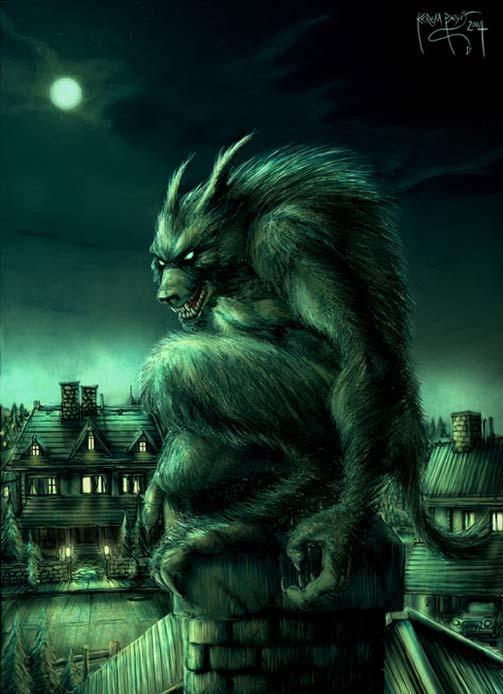
No shit, Sherlock. That's kinda what werewolves are, or were, before Stephanie Meyer pissed all over several centuries of European folklore and changed them into ludicrously buff blokes that turn into cute, fluffy wolves.
That was until I saw your crappy remake of what you call to be a "were wolf". I don't see how you live with yourself for making it the way you did. If I made this movie, I would be ashamed to even admit that I owned it. 
Gee, I don't know how Universal can live with themselves either. I mean, they only distributed a film that reminded everyone what werewolves are MEANT to be like, and which is a re-make of THEIR OWN FILM.
How can a werewolf be killed with a silver bullet?
Because werewolves are mythical creatures, and folklore suggests weapons constructed from silver can harm them. Was that really so bloody hard to figure out for yourself?
Better yet, have you saw the transformation of the man that is "supposed" to be the wolf? He sits in some chair and his entire body turns in to some mutated freak.
How inconsiderate of him. How dare he not pout moodily and flex his muscles beforehand.

So, there you have it. Universal are nefarious plagiarists that should be hung, drawn and quartered for ruining countless Twilight fans' precious werewolves. And let us state this clearly for future posterity: Stephanie Meyer INVENTED werewolves, and they look like this. Anyone that thinks werewolves actually look like this, and that they even EXISTED before Stephanie Meyer wrote the Twilight series, is a FILTHY LIAR.