Showing posts with label Comment/opinion. Show all posts

Thursday, 4 November 2010

More Amazon review nonsense

I've blogged before about some of the ridiculous 'reviews' on Amazon. Despite some changes being made (you now only seem able to post reviews once a book has been released, thus stopping people from giving 1-star reviews as a protest at the delay with a book's publication) there are still major issues with reviews on Amazon.

Pat has highlighted the most recent issue.

"For some unfathomable reason, disgruntled e-book readers have had a stroke of genius and now leave 1-star reviews on various Amazon sites if the title in question is not yet available in electronic format. It's by no means the first novel to suffer from such attacks, but Robert Jordan and Brandon Sanderson's Towers of Midnight has been the target of a slew of 1-star reviews solely due to the fact that the e-book edition won't be released till February 2011.


Now I'm not proclaiming that every e-book reader out there is a moron. But those idiots leaving 1-star reviews to make their displeasure known certainly deserve the title. If the shoe fits and all that crap.


Say what you want about Amazon reviews, the sad truth is that they are a tool used by hundreds of readers shopping for books and other products. Granted, Towers of Midnight won't suffer much from this treatment, but a less popular midlist author could see his or her sales go down the crapper based on the fact that his overall average is down to two or three stars simply due to the fact that assholes are bitching about this or that novel not being available in e-book format. Not every customer will take the time to read every single review to realize, to their consternation, that a bunch of idiots left 1-star reviews without having read the work."

I couldn't agree more. The quality (or lack thereof) of Amazon reviews is well known within the publishing industry, but the simple fact is that thousands of people rely on them when deciding which book to purchase. It therefore follows that a load of negative reviews are going to make people less likely to buy a book. Not that there's anything wrong with that if the reviews are genuine, but when they're the result of some disgruntled reader who has not even read the book in question yet, there's a real problem there. Sure, readers that actually bother to read the 1-star reviews will quickly realise if those reviews are not genuine. But a lot of people probably just look at the average star rating without reading individual reviews, and so may not realise if many of the negative reviews are totally false.

I really do hope - for the benefit of everyone: readers, authors and publishers - that Amazon eradicate this sort of nonsense. You'd think they'd do something, given that it doesn't exactly make their own business look that great if they're happy to publish 'reviews' that are not at all authentic. I'm sure that it's not just a case of someone snapping their fingers and magically everything is resolved, but there must be some sort of safeguard that can be introduced.

Friday, 29 October 2010

Stross attacks "trashy, derivative" steampunk

A rather interesting article on the problems with steampunk, from author Charles Stross.

The opening paragraphs are little more than a rather tetchy rant at the current popularity of steampunk - "the category is filling up with trashy, derivative junk and also with good authors who damn well ought to know better than to jump on a bandwagon" - but it's the argument that follows which is interesting.

"We know about the real world of the era steampunk is riffing off. And the picture is not good. If the past is another country, you really wouldn't want to emigrate there. Life was mostly unpleasant, brutish, and short; the legal status of women in the UK or US was lower than it is in Iran today: politics was by any modern standard horribly corrupt and dominated by authoritarian psychopaths and inbred hereditary aristocrats: it was a priest-ridden era that had barely climbed out of the age of witch-burning, and bigotry and discrimination were ever popular sports: for most of the population starvation was an ever-present threat. I could continue at length. It's the world that bequeathed us the adjective "Dickensian", that gave us a fully worked example of the evils of a libertarian minarchist state, and that provoked Marx to write his great consolatory fantasy epic, The Communist Manifesto. It's the world that gave birth to the horrors of the Modern, and to the mass movements that built pyramids of skulls to mark the triumph of the will. It was a vile, oppressive, poverty-stricken and debased world and we should shed no tears for its passing (or the passing of that which came next)."
Stross goes on to argue that steampunk's failure to acknowledge the darkness and horror of the historical era that it is 'riffing off' is a major failing of the subgenre, and questions how different steampunk would be if it more accurately reflected the actual time period:

"Forget wealthy aristocrats sipping tea in sophisticated London parlours; forget airship smugglers in the weird wild west. A revisionist mundane SF steampunk epic — mundane SF is the socialist realist movement within our tired post-revolutionary genre — would reflect the travails of the colonial peasants forced to labour under the guns of the white Europeans' Zeppelins, in a tropical paradise where severed human hands are currency and even suicide doesn't bring release from bondage. (Hey, this is steampunk — it needs zombies and zeppelins, right? Might as well pick Zombies for our single one impossible ingredient.) It would share the empty-stomached anguish of a young prostitute on the streets of a northern town during a recession, unwanted children (contraception is a crime) offloaded on a baby farm with a guaranteed 90% mortality rate through neglect. The casual boiled-beef brutality of the soldiers who take the King's shilling to break the heads of union members organizing for a 60 hour work week. The fading eyesight and mangled fingers of nine year olds forced to labour on steam-powered looms, weaving cloth for the rich. The empty-headed graces of debutantes raised from birth to be bargaining chips and breeding stock for their fathers' fortunes. In other words, it's the story of all the people who are having adventures — as long as you remember that an adventure is a tale of unpleasant events happening to people a long, long way from home."
This gives rise to a number of interesting questions. Does steampunk fail to effectively deal with the horrific detail of the historical period it is so influenced by? Is the subgenre effectively a romanticism of what was actually a brutal time in history? If so, how much does this truly matter? Is Stross's argument even valid - after all, we're talking about speculative fiction here, not historical fiction (in which an attention to historical detail is vital). To what extent does a genre book based loosely on a real-life historical period need to reflect the zeitgeist of that era? More importantly, perhaps, do readers even care?

Questions, questions. Too many for a Friday, but food for thought. I've not been nearly well enough exposed to this subgenre to be able to comment, but if any of you have any points you'd like to make, then please go right ahead.

Wednesday, 15 September 2010

Fantasy trappings - is less more?

"Too much magic can ruin a fantasy. I was much more interested in the people."

Thus spoke George R. R. Martin in the recently released behind-the-scenes footage of the HBO Game of Thrones production.

This struck a chord with me, as recently I'd started pondering the same idea and the extent to which I agree.  I can't deny that many of my favourite fantasy series have moderate to minor fantastical elements: Martin's own A Song of Ice and Fire, David Gemmell's Drenai novels, John Marco's Tyrants and Kings trilogy, J. V. Jones's Sword of Shadows, and most recently Daniel Abraham's The Long Price quartet.

The reason I like these various series so much is because the focus is almost entirely on the characters; the fantastical elements add texture and depth, but aren't overbearing. These are fantasies that retain a very strong human element.

Yet that's not to say that I don't enjoy fantasies at the other end of the spectrum. I love the magic-intensive world that Steven Erikson and Ian C. Esslemont have created for their Malazan tales, and have really enjoyed some of the epic sequences that spring from this more pronounced fantastical element. The same is true of Mark Charan Newton's Legends of the Red Sun sequence - I really like the world and all the weird trappings.

I guess this leaves me somewhere in the middle when it comes to the above statement. I certainly understand the angle that GRRM is coming from, but can't fully agree with it as I like many series that really do embrace magic and/or more fantastical elements. As long as a story has strong characters, I don't think it really matters how intense the magic and other supernatural aspects are.

That's how I feel at least - I'm quite interested to see what other readers think. Do you prefer books that really crank up the fantasy elements, or do you like the magic and whatnot to be more subtle so that the characters really take centre stage? Or maybe you're like me, and you don't really care either way so long as the author spins a ripping good yarn?

Interested to hear your thoughts.

Sunday, 12 September 2010

An Amazonian call to arms

I saw this ridiculous 5-star 'review' on Amazon.uk this morning, in relation to Brent Weeks' The Black Prism:

"After the brilliant Night Angel trilogy, i'm really looking forward to this book.
It arrived today in the post and what a book! It's a proper book. this hardcover version is like a large dictionary, love that. looks like an epic and it's only part one!!
I just wanted to comment on the physicalities of this book, it's awesome! gonna start this off now and will post my opinion on it when i'm done."

Whoa - a proper book? Who would've thought?  And like a large dictionary, eh? Gotta love those large dictionaries. 5 stars!

Seriously though, this is yet another example - there are countless others - of the appalling standard of reviews that blights Amazon. In fact, this drags the standard down even further, since the dude has not even reviewed the novel, but the physical book. And sure, anyone with half a brain cell can see this, but that doesn't stop it affecting the overall rating afforded to the book.

And the thing is...it matters. So many books are bought online these days, yet the standard of customer reviews is shocking (did anyone from Amazon even check this review? Doesn't look like it). Sure, I imagine it must be tough moderating so many reviews, but if you're going to do it then it should be done properly. Permitting people to post 5-star reviews of a book's physical properties is a joke. There are all sorts of horror stories from people who bought a book as a result of dreadful (or even fake) reviews.

This is why I now post all my reviews on Amazon, and why I think all reviewers and serious readers should do the same. It's important to try and drive up the quality of the reviews available. If each new release has four or five well-written reviews attached to it from prominent members of the online genre community (or from anyone that can write a considered review), then it's offering consumers a far better idea of what to expect from the product.

Please do take the time to post your quality reviews on Amazon - you'll be helping the author, the publisher, and most importantly the consumer (because without the consumers, there's no publishing industry!). The well-read, intelligent members of the online community have the ability to drive up the quality of reviews on Amazon, but only if we all take the time to post our reviews.  

So let's do it.

Monday, 6 September 2010

A quick thought on cover art

Seems the paperback cover for City of Ruin has really split opinion amongst fans.


Mark has highlighted some of the negative reactions to the image, and I've added a few more:

"The Harlequin dude must go. It’s not as bad as the infamous Patrick Rothfuss gay cover...”


"It looks absolutely dreadful, almost like a Harlequin Romance mated with and Urban Fantasy novel."


"It's horrendous. An utter failure. An abomination. My eyes are bleeding profusely as we speak."


"Wish publishers would steer away from this obsession with main characters on covers. It messes with the reader’s heads. We can do our own imagining thanks, that’s what we’re here for."

And so on. Now, I don't have a problem at all with these comments - everyone reacts differently to cover art (although the first comment is misguided in suggesting the cover would be better without the figure - it would be worse off both commercially and artistically if the figure was removed). But whatever.

It's the last comment that interests me though - why do readers hate it so much when an artist's representation of a character doesn't fit with their own?

I just find the psychology interesting. Everyone reacts to things differently - two people can read the same book and have two very different experiences. Hence why an artist's representation of a character won't fit everyone's image of how that person looks: it's their depiction.

Furthermore, it hardly matters does it? Just because the character on the new cover for your favourite book doesn't look at all like you imagined them, doesn't mean your own image is made redundant in any way. The depiction on the cover is just one person's image of that character - it doesn't have to be yours. You remain free to envisage that character however you like. And the publisher isn't trying to brainwash you with regards to what the character looks like, or spoil your own interpretation in any shape or form - to think that is just ridiculous (the only thought in the publisher's mind is to make the depiction of said character as widely appealing as possible).

I guess the point I'm trying to make here, is that I think it's unfair to slate a cover just because you don't like the depiction of the character.

Personally, I like the above cover. And no, Brynd doesn't look at all like I imagined him - but that's utterly irrelevent to me.

Friday, 20 August 2010

A conversation with Alden Bell

The Reapers are the Angels is one of the best books I've read this year (review), and soon you'll be able to see why, as it's released in the UK next month. For those of you in the US, it's already out, so go go go! Wonderful book. I've seen one or two reviewers call it a generic zombie novel, but I have to completely disagree. But whatever, it's excellent. Check it out.

Anyway, author Alden Bell - pen name of Joshua Gaylord - is a newcomer to the genre, and by way of welcome fellow Tor author Mark Charan Newton has conducted a substantial online chat with him:

Mark: You get no sympathies from me living in Orange County, dude. But that’s an interesting disconnection between yourself and the American Dream. Whereas so many of the Great American Novels that I’ve read almost celebrate the iconic, Reapers almost came across as if you were writing the anti-American Novel – a literal and assiduous destruction of its landscape and humanity. Noting the psychology there, was that a conscious decision? Or does it come down to the simple fact that you just dig zombies?
Alden: Okay – I’m gonna to have to go all English teacher on you. There’s a great passage at the end of Gatsby where the narrator imagines the first settlers coming to the New World and finding themselves “face to face for the last time in history with something commensurate to [their] capacity for wonder.” What he’s talking about, I think, is the dangerous diminishment of the American Dream. It used to be about building societies up from scratch, recreating your identity out of nothing, inventing whole new worlds. Now that those new worlds are built, the only things left to strive for are vacations to Aruba and memberships to the right country clubs. Fitzgerald knew it: we still have the instinct to dream but not much left to dream for – which creates a dangerous disconnect. So the apocalypse in Reapers does destroy America, but it also resets it to its original promise. It becomes, once again, a landscape where you can build things from scratch. So it’s anti- and pro-American Dream at the same time. And the zombies? To me, they’re like cilantro – if I can figure out a way to add them into the mix, I’ll do it.

It's a really interesting conversation, with a refreshingly natural feel, so do check it out.

Thursday, 19 August 2010

Excerpts from Locus magazine's interview with N. K. Jemisin

N. K. Jemisin's debut novel The Hundred Thousand Kingdoms has been well-received, and Locus magazine have conducted an interview with the author herself, extracts of which can be found on the Locus website.

“The way we write traditional epic fantasy now is making the whole genre look bad. I’ve heard so many people who read my book say, ‘I stopped reading epic fantasy years ago, but I liked this. It doesn’t feel like those epic fantasies.’ I think what they’re saying is that the genre has become so formulaic that it’s almost stagnant. I’m tired of fantasy medieval Europes in general, but what really bugs me are bad medieval Europes. … There’s no reason for medieval Europe-based fantasies to be as boring as they are. It’s time to shake things up.”

Refreshing to hear such views, especially from a newcomer to the genre (many debut authors seem reluctant to rock the boat too much, which admittedly is understandable). It's important that authors speak up about issues like this, rather than just leaving it to the fans to debate.

Wednesday, 18 August 2010

Marco praised, Stanek slapped (again)

Just thought I'd draw your attention to a couple of articles by some of my fellow bloggers.

Firstly, just a quick reminder that the EPIC GIVEAWAY will be closing tonight at midnight, GMT. So this is your last chance to enter if you haven't already.

Now, links.

John Marco is an author I greatly admire, and whose name deserves to be mentioned a lot more than it is (as I've said before, his Tyrants and Kings trilogy is excellent). Subsequently I was pleased to stumble across this article, which basically echoes my own thoughts:

"I was first introduced to John Marco a number of years ago by a good friend of mine through the first book in his Tyrants and Kings Trilogy, The Jackal of Nar. After that I was hooked. To this day, years later, I can vividly see the cathedral of Nar being frescoed, hear the din of each battle, but most of all I can still feel every bit of pathos written into his books.


And that’s what draws me back to John Marco; his characters are so real you can practically reach out and touch them. They could be any one of us and their struggles are monumental. Marco takes you to highs and brings you down low with a manageable amount of characters with whom you grow unbelievably attached. Their motivations are understandable and their suffering can be heart-wrenching at times, not to mention their exhilarating triumphs."

Couldn't agree more.

Moving on, I was tweeting recently about how I was feeling an alarming urge to test my book-blogger mettle by reading and reviewing Terry Goodkind's craptacular Wizard's First Rule. Larry, however, has taken on one of the most hardcore reading challenges to be found in the genre: he's read and reviewed Robert Stanek's infamous Keeper Martin's Tale (a self-published book so bad that one unfortunate reader - in one of the best-titled forums threads I've ever seen - said after reading it, and I quote, "Robert Stanek shat directly into my soul."

Unsurprisingly, Larry rips the book a new one:

"By cynically manipulating the social media (knowing perhaps all along that his ham-fisted attempts at self-promotion would backfire), he has created a reading dissonance that allows the most cynical and distrusting readers to get a sort of schadenfreude joy out of beholding almost pure, unadulterated crap. If this is actually the case and that Stanek is not actually serious about believing that this story is worth reading as a straight-up text, then perhaps Stanek did succeed brilliantly in creating a work that perhaps could serve as an early 21st century spiritual successor to Jim Theis' Eye of Argon. However, it is much more likely that he is just self-delusional about his talents as a writer and that this work is just shit on a level that makes elephant turds shrink to a scale of that of squirrel turds."

No doubt Larry will soon receive an email from a hotmail address, pertaining to be from a NYC lawyer and demanding the immediate removal of the review.

Friday, 6 August 2010

Winter Warriors - an appreciation

David Gemmell's Drenai novels are notable for their low-fantasy setting; while supernatural elements are present in them, they mostly tend to be fairly minor and rarely have a major influence on the stories. These novels are primarily about human beings, and their flaws and foibles. They are character-driven; this has always been their strength.

Winter Warriors is the black sheep of the Drenai family, because it boasts far more prevalent supernatural elements than the other novels in the series. 

The reason for this, according to rumour (I'm unsure as to whether it was ever confirmed), is that the book was not originally written as a Drenai novel; instead, it was intended as an individual title like Dark Moon, Echoes of the Great Song, Morning Star and Knights of Dark Renown. Like Winter Warriors, all of these novels feature much stronger supernatural elements than the Drenai books. However, Gemmell's publisher allegedly persuaded him to change the novel's setting on the basis that the book would achieve greater sales if it could be marketed as a Drenai novel. 

This is certainly a good explanation as to why Winter Warriors features more fantastical elements than the rest of the novels in the Drenai saga: demons and vampires, enchanted swords and prophecies abound.  

Yet like most of Gemmell's novels, the premise is simple: upon the death of three kings, a race of demons will return to take back the world that they view as theirs by right, and to take their vengeance on mankind. Two of the kings are dead, the third - an unborn child - is hunted by the terrifying Krayakin, Lords of the Undead. 

Driven from the luxurious surroundings she is used to, the pregnant queen finds herself forced to flee for her life through dark forests and over snow-capped mountains, as the demonic forces snap at her heels. 

Yet she is not alone. Protecting her are three warriors, who have been dismissed from the Drenai army because of their age: Nogusta the Swordsman, Bison the fighter, and Kebra the Bowman. Their loyalty is unquestionable, their experience invaluable, their talents almost without match. Yet they are old men; their best years are behind them. 

As their enemies close around them, one question remains - can these three aged warriors prevent the world from sliding into darkness? 

Despite these high-fantasy elements (which curiously are at odds with Gemmell's brand of low-fantasy), Winter Warriors is still very much a book where the characters take centre stage. The plot may be a little more driven by the unfolding events than many of his other books, yet his strong grasp of characterisation remains intact. 

The novel's strongest point are the three principal characters, and the dynamics of their relationships with each other; they are quintessential Gemmell heroes. All of them have flaws and personal demons that they must do battle with. Nogusta is forced to confront the horror of his past at every turn, while Bison fights a different enemy - the knowledge that age has caught up with him, and that his soldiering days are almost over. Kebra, meanwhile, struggles with his fading eyesight and the lack of discipline that characterises his newfound existence. Their personal struggles are just as enthralling as their battles against the sinister, black-armoured Krayakin, and their personalities are judged perfectly: Nogusta's nobility and Kebra's brevity combine seamlessly with Bison's affable crudeness, lending genuine depth to their friendship as well as allowing for several amusing exchanges and moments throughout the novel. 

The other characters are also well drawn, such as the young Drenai officer Diagoras, who battles self-doubt, and the arrogant Ventrian swordsman Antikas Karios, another man who must confront the darkness that lurks in his own soul. The development arc and changing personality of the queen, Axiana, is handled well, as is that of the priestess Ulmenetha. Interestingly, Gemmell also provides POVs from the demonic side of the story, and these are no less interesting than their human counterparts; the Krayakin are suitably threatening antagonists. Gemmell uses these different perspectives to explore several ideas about love and hate, revenge and redemption - themes which, as with all his books, permeate the story. 

Speaking of the story, it's gripping and rips along at a very satisfying pace. The tension is cranked up wonderfully, there are a number of intriguing twists and revelations, and just when you think you're going to get the classic Gemmell device of a battle where defenders face overwhelming odds, you end up with something rather different. As the action hots up, the line between hero and villain becomes ever more blurred.

This is the fourth time I've read Winter Warriors, yet its potency has not lessened. I'm still transfixed by the same duels, I still laugh at the same jokes, I still engage completely with these characters and their hopes and fears. Put simply, it really is utterly riveting stuff. 

I think it's the romantic undertone of the novel that speaks to me the most - the idea of three old men risking everything to save a kingdom that has cast them aside, speaks to me very deeply. 

Gemmell's best novels are hugely inspiring; the heroism in them never fails to lift my spirits. Winter Warriors is no exception. 

Wednesday, 4 August 2010

If ever there was a cover that made me want to read a book...

...then this is it.


Never mind that it's old, or that its got a crap name, or that it's a Landover novel by Terry Brooks (as opposed to his Shannara novels, the earlier ones of which I rather enjoyed). Just behold the pure awesomeness of a HUGE BLACK DRAGON brawling with a GIANT WORM-THING.

Talk about epic.

Has anyone read Witches' Brew *snicker* and, if so, does it have a truly epic smackdown featuring said participants?

Tuesday, 27 July 2010

A few words on HBO's Game of Thrones adaptation

I tweeted this recently, but thought it was worth repeating here: I think HBO have done a stonking job casting this series.

It's great to see that they've not been afraid to cast unknown actors and actresses who have little to no experience of acting for TV or film. But more importantly, it's hugely encouraging to see how much effort they've put into casting the dozens of roles (I'd forgotten how big a story this is, and how many characters it involves, until I read the news of all the castings).

Wert (yep, him again) has done some great posts on the recent castings: here, here, here and here. In terms of looks, most of these actors/actresses look spot on. Only castings I'm not convinced by are Jerome Flynn as Bronn (he could certainly pass for the sellsword, but can he pull off the dark wit?) and Gethin Anthony as Renly Baratheon (he looks a bit young, though it might be an old photo). But otherwise the casting is excellent - James Cosmo as Jeor 'The Old Bear' Mormont and Aiden Gillen as Littlefinger are particularly good examples.

Such has been the excitement since the project was first revealed, even the mainstream is sitting up and taking notice: there's a piece on The Guardian website about the series:
"With feelings so high there is a danger that the show will be unable to live up to the hype. But all the signs so far are positive. It's being made by the same team that made Rome – so the BBC has a stake in the show. It's being shot mostly in Northern Ireland and the cast – including the aforementioned Bean and Lena Headey – looks great. Much fan excitement surrounded the "perfect" casting of Aidan Gillen from Queer as Folk and the Wire as machiavellian puppet master Littlefinger. (Yes, that is the second character I've described as machiavellian – it's that kind of story.) Buffy writer Jane Espenson is part of the writing team, as is Martin himself. It seems that the adaptation is going to be solid and faithful to the text – no wily re-imagining. With source material this good, that's no bad thing."
While it's cool to see the coverage the series is getting, I have to take issue with a couple of things in the article.

Firstly:
"For the uninitiated – that is, people who don't gleefully buy 600-page books from the nerd section of Waterstone's – A Game of Thrones is the first book in the A Song of Ice and Fire series."
Ah, mainstream coverage of something related to the genre wouldn't be complete without the usual snipe. Seriously, what's the point? The whole "nerd section" nonsense could have been left out of that; it's totally irrelevant. Still, we've come to expect this sort of snobbishness from the mainstream.

Also:
"A Game of Thrones is high fantasy; although with a lot more swords than sorcery. It's a world of prophecies, exiled princesses, talking crows and magical trees."
Sheesh, what a crap way of describing the series - talk about making it sound like something it's not. High fantasy? No, not really. A Song of Ice and Fire is a series in which the primary focus is on the feuding of several different families - with the focus very much on the characters; it's been described as the War of the Roses with dragons, and that's not a bad description. Certainly, the elements mentioned above are minor elements. The 'magic trees' description particularly pisses me off, as it's not really accurate. All things considered, Martin's world is relatively low-magic, so to definite it as above doesn't do it justice.

Ho hum...
Anyway, for all the latest news on the production, check out the excellent blog Winter is Coming. 

Monday, 26 July 2010

Quote of the day + assorted Viriconium commentary

This quote from the Westeros forum, in a thread about M. John Harrison's wonderful Viriconium sequence, made me laugh:
"But I agree that the last story in the Viriconium collection left me feeling as if someone had tried to beat me to death with a rubber chicken."
I can understand completely where the poster is coming from; the last story in the sequence - A Young Man's Journey to Viriconium - is bizarre and hard to fathom. As is, admittedly, much of the Viriconium material, not that this stops it from being staggeringly good at times.

Anyway, the thread threw up some Viriconium essays that Larry wrote some time ago, and slipped under my radar since I'd not read Viriconium back then. The first is a very good examination of The Pastel City, the first 'novel' from the Viriconium sequence:

"As I read The Pastel City, I found myself slowing down to read and re-read almost every single paragraph. There is a richness in Harrison's prose that makes reading each sentence a pleasure. Look again at the passage quoted above. Say it aloud, listening for the rhythms. There is a music of sorts in Harrison's writing, a music that is haunting and seems to come from a place within us that isn't a discoverable, tangible country."
It's pleasing to see someone actually focus on the novel's prose, and give it the appreciation it deserves. M. John Harrison is a figure that evokes hostility in a lot of genre fans, many of whom appear to have decided - rather foolishly, in my humble opinion - that his books must be shit because he's quite outspoken about the genre: "Isn't he the dude that said worldbuilding is for nerds? OMG HE MUST BE A DICKHEAD." A comparison has even been made with Terry Goodkind, which is laughable (for many reasons, but mainly because Harrison can actually write). I just think it's a shame that so many people have missed out on Viriconium simply because they've been upset by something Harrison has said. Sure, it's not for everyone. Yes, much of it is incomprehensible. But it's also wonderful at times, and the prose is sublime. Say what you like about Harrison - and people are never shy to - but you can't deny that the guy is a wonderful wordsmith. He also makes a lot of interesting points about the nature of epic fantasy in the pages of Viriconium - check out Larry's essay for more information.

Larry's second essay, on A Storm of Wings, can be found here. My own review of Viriconium is here.

Sunday, 11 July 2010

Rough online preview chapters - good or bad idea?

This is something I've been wondering for a while now, and I'm interested to see what others think.

Some time ago I read the opening chapter of Blake Charlton's Spellwright on his website. It was a rough version that - I think - was unedited.

I didn't think much of it at all, and decided largely on the basis of this rough chapter that the book wasn't for me.

Fast forward a few months, and I chance upon a hardback copy of Spellwright in my local bookstore. So I picked it up and scanned the first few paragraphs to remind myself why I didn't like the opening chapter.

Instead I found myself thinking, "Hmm, actually...this isn't bad at all."

Obviously, the chapter I read in the bookshop was the finished version - it had gone through the extensive editing process, and had been polished, polished, and then polished some more.

The result was that I changed my mind and decided that maybe I would give Spellwright a shot after all.

So the question I'm asking is this: is it a good idea for an author to post up rough, unedited sample chapters of their debut novel on their website? It's a trait I'm starting to see more and more of, yet I question its value.

Based on my own experience, I'd have to say no. It's very hard for debut authors to make a significant impact - for every debut that causes a buzz, there are a dozen that barely cause a ripple. Why make it harder for yourself by showing everyone your rough, unpolished prose?

I suppose the counter argument is that perhaps a lot of readers will like the sample chapters, and they act as a sneak preview sort of thing, which some readers appreciate - and this may even help create some buzz. But for people like me, for whom strong, stylish prose is highly desirable, it has the opposite effect. I don't really like the majority of writers' polished prose, so showing me your rough version is not really advised.

There are certainly two sides to this argument, and I'm interested to see which side people fall on.

Thursday, 24 June 2010

The allure of the assassin

As I mentioned in my review of Jon Sprunk's Shadow's Son, it seems that assassins are becoming increasingly popular in epic fantasy these days. Of course, they've long been a staple of the genre: from Fritz Leiber's Fafhrd and the Gray Mouser stories (1939 onwards), to M. John Harrison's A Storm of Wings (1980, part of his wonderful Viriconium sequence), to the likes of Robin Hobb's Farseer trilogy (1990s) Steven Erikson's Malazan Book of the Fallen (1999 onwards). No doubt there's plenty of other examples; I can't claim to be well read enough to be able to give a definitive guide.

Yet it's only in recent years that we've really seen a growing emphasis on assassins as the main protagonists in fantasy novels, perhaps most notably with Brent Weeks' popular The Night Angel trilogy. Col Buchanan's Farlander and Jon Sprunk's Shadow's Son have quickly followed, while Jon Courtenay Grimwood's The Fallen Blade is in the works.

This growing emphasis on the assassin - and the apparent popularity of such characters - has led me to ponder a question - why? What is it about these shady figures that readers find so appealing?

Assassins kill people in cold blood - for money. In real life, there's nothing remotely glamourous about it; it's a despicable way of making a living. Yet assassins are rapidly becoming the rockstars of fantasy literature; there seems to be a certain glamour about the way they live their lives on the edge, dicing with death every other night.

So how come there's such a distinction between real life and literature? Rapists are treated the same way in fantasy books as they are in real life: with disgust and contempt. Yet assassination in the real world is a heinous crime, it's murder, yet in fantasy literature it's somehow acceptable - cool even.

So how come? It's a question that I can't really think of an answer for. What sort of odd psychology is at work, that makes it acceptable to root for characters that kill in cold blood? Often these assassin protagonists have experienced traumatic events earlier in their lives that have shaped them into what they have become (this is true of both Weeks' and Sprunk's characters) but is this enough to justify what they do? Does it even matter?

Food for thought. If you've got any opinions or theories on the subject, I'm very interested to hear them.

Tuesday, 22 June 2010

I am Legend: the darkest post-apocalyptic book ever written?

That's the question that's been asked over on the Orbit blog by Terry DeHart:
What is it about early postwar sci-fi that makes its worlds seem so dark and realistically shabby? Proximity to nuclear annihilation? The poorly forgotten horrors of World War Two? The rote mediocrity of peace after the time of global death and flame ended, the famished beginning of the age of mass consumption? Or is it only that we’ve been conditioned by the black-and-white movies of that time?
Whatever it is, Richard Matheson’s I AM LEGEND is shot through with it. This book is wonderfully dark. Neville drinks. He sweats and laughs and cooks and eats and cries and, in between bouts of near-insanity, he kills people. It seems as if killing is the most rational thing left to do. And Matheson puts the reader right there with him.
I'm not able to offer an answer as to whether I am Legend is the best post-apocalyptic book ever written (I'm not nearly well read enough to even begin considering that question) but having read Richard Matheson's famous novel I can certainly understand why it's considered to be a contender for this accolade.

Although I've only read I am Legend once, and that being several years ago, so many of the novel's scenes have stuck in my mind and even now I can recall them with clarity.

What I love most about this book is the psychology of it all, the way Robert Neville goes from being the hunter during the day to being the hunted at night. The desolation and loneliness of the urban landscape is wonderfully portrayed by Matheson, yet the sheer isolation and claustrophobia that he imbues Neville's nights with is even more striking and shocking. Imagining Robert Neville - the last man on Earth - sitting in his living room, drinking liquor and listening to classical music as the hordes of vampires shriek out his name and throw themselves against his defenses, is just such a powerful image - it speaks of both hope and hopelessness, determination and despair.

Matheson's prose is also wonderfully blunt, yet evocative. The opening sentence is one of the best I've ever read:
On those cloudy days, Robert Neville was never sure when sunset came, and sometimes they were in the streets before he could get back.
With that one line Matheson says so much: he reveals the significance of the sunset, the vulnerability of Neville in his inability to gauge it effectively, and of course the oppressive threat that he faces. One sentence, so much meaning. Brilliant.

I am Legend is available as part of the Gollancz Masterworks series, and if you've not read it - why not? - then you can pick it up for a fiver on Amazon.

Oh, and forget the recent film adaptation - it's total garbage and barely reflects the novel at all, let alone reflect its brilliance.

Saturday, 5 June 2010

Twilight fan in amusing Wolfman rant

This made me laugh this morning, so thanks to Mihir over at Fantasy Book Critic for the heads-up on this one.

Latino Review have posted an email they received from an irate Twilight fan, who was fuming at the fact that Universal's film The Wolfman 'gives the werewolves a bad name.' No, really. You can find the full email here.

Here's my favourite snippets:
This movie was a complete waste and I feel that it offends ALL Twilight Fans around the world, that including myself. For one, it was a COMPLETE remaking of the Wolf Pack from the Twilight Saga: New Moon. 
Um...no. It was a re-make of THE WOLFMAN, a film that was released in 1941. Hence the name.
It gives the werewolves a bad name and makes them look like some deformed mutation of a rabid dog.
No shit, Sherlock. That's kinda what werewolves are, or were, before Stephanie Meyer pissed all over several centuries of European folklore and changed them into ludicrously buff blokes that turn into cute, fluffy wolves.
That was until I saw your crappy remake of what you call to be a "were wolf". I don't see how you live with yourself for making it the way you did. If I made this movie, I would be ashamed to even admit that I owned it. 
Gee, I don't know how Universal can live with themselves either. I mean, they only distributed a film that reminded everyone what werewolves are MEANT to be like, and which is a re-make of THEIR OWN FILM.
How can a werewolf be killed with a silver bullet?
Because werewolves are mythical creatures, and folklore suggests weapons constructed from silver can harm them. Was that really so bloody hard to figure out for yourself?
Better yet, have you saw the transformation of the man that is "supposed" to be the wolf? He sits in some chair and his entire body turns in to some mutated freak.
How inconsiderate of him. How dare he not pout moodily and flex his muscles beforehand.

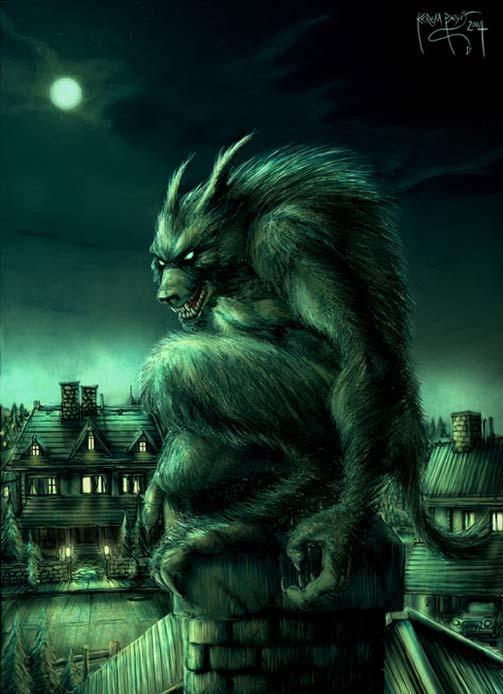
So, there you have it. Universal are nefarious plagiarists that should be hung, drawn and quartered for ruining countless Twilight fans' precious werewolves. And let us state this clearly for future posterity: Stephanie Meyer INVENTED werewolves, and they look like this. Anyone that thinks werewolves actually look like this, and that they even EXISTED before Stephanie Meyer wrote the Twilight series, is a FILTHY LIAR.

Sunday, 9 May 2010

GRRM on fanfic

Really interesting article on fan fiction from George R. R. Martin:
Consent, for me, is the heart of this issue. If a writer wants to allow or even encourage others to use their worlds and characters, that's fine. Their call. If a writer would prefer not to allow that... well, I think their wishes should be respected. 
Myself, I think the writers who allow fan fiction are making a mistake. I am not saying here that the people who write fan fiction are evil or immoral or untrustworthy. The vast majority of them are honest and sincere and passionate about whatever work they chose to base their fictions on, and have only the best of intentions for the original author. But (1) there are always a few, in any group, who are perhaps less wonderful, and (2) this door, once opened, can be very difficult to close again. 
Most of us laboring in the genres of science fiction and fantasy (but perhaps not Diana Gabaldon, who comes from outside SF and thus may not be familiar with the case I am about to cite) had a lesson in the dangers of permitting fan fiction a couple of decades back, courtesy of Marion Zimmer Bradley. MZB had been an author who not only allowed fan fiction based on her Darkover series, but actively encouraged it... even read and critiqued the stories of her fans. All was happiness and joy, until one day she encountered in one such fan story an idea similar to one she was using in her current Darkover novel-in-progress. MZB wrote to the fan, explained the situation, even offered a token payment and an acknowledgement in the book. The fan replied that she wanted full co-authorship of said book, and half the money, or she would sue. MZB scrapped the novel instead, rather than risk a lawsuit. She also stopped encouraging and reading fan fiction, and wrote an account of this incident for the SFWA FORUM to warn other writers of the potential pitfalls of same. 
That was twenty years ago or thereabouts, but that episode had a profound effect on me and, I suspect, on many other SF and fantasy writers of my generation.
GRRM's article was in response to a post on the same topic by Diana Gabaldon, which caused a bit of a  shitstorm.

It was quite interesting to read what people think does and doesn't constitute fanfic, and their various explanations/excuses for why they write/read it. It's such a complicated issue that even GRRM has subsequently admitted he's not totally clued-up on the legalities of it all.

My own feelings towards fanfic are pretty straightforward: I think it's pointless.

If you want to be a writer, write your own material. A lot of people have argued they write fanfic to develop their writing ability, but I think you'll improve much more quickly and to a greater extent if you're creating your own characters. After all, characters are the heart of every story, and pissing about with characters that someone else has devised and developed isn't going to help you develop a strong grasp of characterization. And yeah, perhaps by writing fanfic you can develop your skills in other aspects of writing - but you can do so equally well by writing your own original material.

As for the reading side of things, I just don't get it. I don't have enough time to read all the 'proper' books I've got sitting on my living room table, let alone time to trawl through countless poorly-written, ill-conceived fanfic. Furthermore, fanfic isn't canon - so what's the point? You're reading stories about events that - as far as the original creator of the world/characters is concerned - never happened. So why bother? I just can't see the sense of it.

No matter what angle I look at it, 'serious' fanfic just appears to me to be masturbation in prose form.

Friday, 7 May 2010

The speculative genre, from a newcomer's perspective

Really interesting article from genre newcomer M. D. Lachlan, in which he discusses some of the differences between the speculative genre and the mainstream from a writer's perspective:
"Fantasy authors are much less up their own bums than mainstream authors. They’re approachable and friendly . I can honestly say I’m yet to encounter a bad attitude from anyone at all. I arrange to meet other authors for drinks in town, I go to dinner with them, sit on panels with them at conventions and talk about writing. 
The judge of someone is how they treat you when they have nothing to gain, and nothing to lose from acting badly towards you. Take the Advanced Review Copies for Wolfsangel. When I published my first comedy novel in 2000, ARCs were sent to a number of writers to see if they’d be willing to comment. One did - the lovely and gracious Jill Mansell. Another famous author phoned me up to tell me how much he’d enjoyed the book. ‘Can we use your quote on the front?’ I asked. ‘Are you joking?’ he said, ‘you’re a rival now’. 
Wolfsangel was sent to about 12 authors. Eight replied with quotes. I was staggered, not so much that people had agreed to say nice things about my work but that they’d read it in the first place. That’s a serious commitment of time to a new author. But this is the thing about fantasy – the authors tend to be fans. They actually love the genre they write in and are baying to snap up anything new."
You can - and should - check out the full article on the Gollancz blog.

Thursday, 6 May 2010

The 'Bear Pit'

From an article on Mark Charan Newton's blog:
With great power comes great responsibility – little do online commentators realise how fragile creative egos can be. You might chuckle, but to some, a damaging comment can prevent a writer from doing his or her job properly. Some might crumble for a week, who’s to say? I’ve been pretty lucky, but I cringe at reading scathing reviews of other authors’ work. So whilst I was full of snark at the start of this post, I do actually understand how such things can harm writers. And yes, some writers really do care about what people think of their work. Yes, they receive Google Alerts about the fruit of their labours. Surely that’s a good thing, that they give a shit? I suppose if you’re the kind of person who enjoys attacking creative works for kicks, then you need a little more help than this blog post can offer.
There's no doubt that the arena for book criticism and reader feedback has grown hugely since the advent of the online forum, Amazon reviews, blogs, etc. And how a writer copes with this bombardment of criticism, and how it affects them, is an interesting topic.

Author Mark Chadbourn delves deeper into the issue; here's a few snippets from his article:
The net now is like a city centre pub. You’ve got the group getting drunk and having a laugh. The intense couples ruminating over a glass of claret. And you’ve got the swivel-eyed, shaven-headed men in brown leather jackets at the end of the bar who bellow at anyone who will listen. And they’ve all got an opinion, and they all want to tell you.
This analogy isn’t just about bloggers. It’s about anyone who chimes in with their take on a book – on Amazon, Barnes & Noble, Waterstones, Good Reads, wherever. If you’re a writer, it’s nigh on impossible not to hear what people think about your book.
It didn’t use to be like that. You’d get a flurry of print reviews when the book came out, and then silence for months while you worked on the next one. Now they come in a torrent, every week, every day.
Back then, reviews were carefully considered. Today some are still carefully considered. But as in that city centre pub, some are rants, abusive, vitriolic, opinions filtered through prejudices. And that’s how it should be – the net has given people a voice, and it’s up to them what they want to say...
So, yes, I pity the new writer. If your first book is coming out, you’ve got it harder than I ever had. You’re going to be judged. You might be torn apart. You might be built up so fast your head is spinning, and then torn apart. It might just be the death of a million tiny pinpricks. Or you might ride that upward trajectory for the rest of your life. But it’s going to be out of your hands, and it’s going to be very hard to ignore it.
I like Chadbourn's use of the term 'Bear Pit', which he uses to describe Amazon reviews but which could easily be applied to online genre fandom as a whole. The truth is, the blogosphere has grown to such an extent now that a lot of it is just white noise. While I believe the majority of serious fans are capable of discerning between good and bad reviewers, there's so many opinions from so many different commentators flying around that it's often difficult to know who is worth listening to. I suppose for authors it's twice as bad - because the opinions are about their books, which adds a personal element to it. I don't doubt that it must be tough for new writers to see their book hurled out there and set upon by hordes of ravenous reviewers, many of whom fail to give considered, constructive opinions.

Yet it's important not to view the online genre scene too negatively. Yes, it has its flaws. Yes, it probably puts new writers through a whole gauntlet of emotions (many of them undesirable). But we need perspective here: the online scene is just a small representation of the book-buying public, and the vast majority of reviews and reviewers have barely any influence on sales. Most of the opinions flying around carry very little weight or authority (and I include my own, here), so a writer that sees their book attract a flurry of negative reviews should try not to get too downbeat about it (though admittedly this is far easier said than done, I'm sure, especially when some of those reviews are badly-written).

We should also consider the fact that the online scene allows for a great deal of interaction between authors and readers, and this sort of thing - when handled properly - can help launch careers. Joe Abercrombie is a good example of an author who successfuly used the myriad of online possibilities to his advantage. While we're a small crowd, it certainly doesn't hurt if you can win us online fans over.

So while I fully understand how it must feel to be a new writer being dragged into the Bear Pit, we mustn't lose sight of the positive aspects that online critiquing offers both writers and readers.

Ultimately it's a double-edged sword.

Thursday, 21 January 2010

So...what's going to be the 'hot' fantasy debut of 2010?

Every year there's one debut fantasy novel that garners more online hype/buzz than all the others: The Lies of Locke Lamora in 2006, The Name of the Wind in 2007, The Painted Man in 2008 (though some might argue Brent Weeks' The Way of Shadows was equally hyped) and Nights of Villjamur in 2009. This then raises the inevitable question - what debut is going to be the 'hot' release of 2010?

I wouldn't be surprised if it ended up being one of these five novels...


The Hundred Thousand Kingdoms

By N. K. Jemisin

(Orbit, 4 February 2010)

Blurb:

"Yeine Darr is an outcast from the barbarian north. But when her mother dies under mysterious circumstances, she is summoned to the majestic city of Sky - a palace above the clouds where gods' and mortals' lives are intertwined. There, to her shock, Yeine is named one of the potential heirs to the king. But the throne of the Hundred Thousand Kingdoms is not easily won, and Yeine is thrust into a vicious power struggle with a pair of cousins she never knew she had. As she fights for her life, she draws ever closer to the secrets of her mother's death and her family's bloody history. But it's not just mortals who have secrets worth hiding and Yeine will learn how perilous the world can be when love and hate - and gods and mortals - are bound inseparably."

This one's already received a very positive review over at Fantasy Book Critic. So far it's not yet received the coverage of some of the other debuts, but I have a feeling that might change. One thing that Robert's review praises is the prose, which I find encouraging - far too many fantasy books, especially debuts, are marred by wooden, dull writing. The premise is nothing new, but certainly sounds like it has potential. If I can get hold of a review copy, I'll be giving this one a go. The early release date is another aspect the book has to its advantage - plenty of time to generate buzz and generate a fan base before the enevitable 'Best of' lists at the end of the year.

One thing though - what's with the series title? Calling it The Inheritance Trilogy is a not a great idea, and one you'd have thought the editors would have changed (I certainly wouldn't want people to see my book and immedaitely think of Paolini's much-maligned series of the same name).


Spellwright

By Blake Charlton

(HarperVoyager, 8 July 2010)

Blurb:

"In a world where words can come to life, an inability to spell can be a dangerous thing. And no one knows this better than apprentice wizard Nicodemus Weal. Nicodemus is a cacographer, unable to reproduce even simple magical texts without 'misspelling' - a mistake which can have deadly consequences. He was supposed to be the Halcyon, a magic-user of unsurpassed power, destined to save the world; instead he is restricted to menial tasks, and mocked for his failure to live up to the prophecy. But not everyone interprets prophecy in the same way. There are some factions who believe a cacographer such as Nicodemus could hold great power -- power that might be used as easily for evil as for good. And when two of the wizards closest to Nicodemus are found dead, it becomes clear that some of those factions will stop at nothing to find the apprentice and bend him to their will!"

This one will probably prove popular, though I don't think it's for me. I read the opening chaper and it did nothing for me at all - I found the prose uninspiring and the dialogue rather wooden (I'm aware this was an unedited version, but even so...). Aidan enjoyed the book, but his review pretty much put me off the novel - he indicates that fans of Brooks, Williams and Feist will probably enjoy the novel, but fans of Lynch, GRRM and Abercrombie most likely wouldn't. That's the feeling I had as well, and since I'm firmly entrenched in the latter's camp, I doubt that Spellwright is going to work for me.

Yet plenty of readers love this more sort of traditional fantasy (boys with mysterious powers they can't control, demon hordes, etc) and so this book will probably prove popular, especially because the premise hints at some fresh ideas, mixing them up with one or two classic cliches tropes - Peter Brett's The Painted Man did something very similar, and look how popular that book was. So I therefore expect this to be - if not the 'hot' novel of the year - a success nonetheless. Which is certainly more than can be said for the horrific UK artwork, which really is a piss-poor effort.


Tome of the Undergates

By Sam Sykes

(Gollancz, 18 February 2010)

Blurb:

"Lenk can barely keep control of his mismatched adventurer band at the best of times (Gariath the dragon man sees humans as little more than prey, Kataria the shict despises most humans and the humans in the band are little better). When they're not insulting each other's religions they're arguing about pay and conditions. So when the ship they are travelling on is attacked by pirates things don't go very well. They go a whole lot worse when an invincible demon joins the fray. The demon steals the Tome of the Undergates - a manuscript that contains all you need to open the undergates. And whichever god you believe in you don't want the undergates open. On the other side are countless more invincible demons, the manifestation of all the evil of the gods, and they want out. Full of razor-sharp wit, characters who leap off the page (and into trouble) and plunging the reader into a vivid world of adventure this is a fantasy that kicks off a series that could dominate the second decade of the century."

Gollancz have a good track record with debuts, releasing both The Lies of Locke Lamora and The Blade Itself to critical acclaim in recent years. Tome of the Undergates is their big debut release of 2010 and they seem to have pretty high hopes for it. From flicking through my ARC, I was quickly reminded of Abercombie and Lynch, and that's certainly no bad thing. I think this debut will be aimed firmly at fans of those two writers, though whether it can replicate their respective success obviously remains to be seen. Wert's assessment was decidedly lukewarm, while another review is a little more positive but also mentions flaws that Wert picked up on - I'm interested to see if I think the same way. I certainly intend to read this one at some point, though given the size of the damned thing it's not going to be easy lugging it on my daily commute... Certainly a strong contender for 'hot' novel of the year - though will readers be expecting too much, given the quality of new talent that has emerged from the Gollancz stable in recent years?


Farlander

By Col Buchanan

(Tor, 5 March 2010)

Blurb:

"The Heart of the World is a land in strife. For fifty years the Holy Empire of Mann, an empire and religion born from a nihilistic urban cult, has been conquering nation after nation. Their leader, Holy Matriarch Sasheen, ruthlessly maintains control through her Diplomats, priests trained as subtle predators.

The Mercian Free Ports are the only confederacy yet to fall. Their only land link to the southern continent, a long and narrow isthmus, is protected by the city of Bar-Khos. For ten years now, the great southern walls of Bar-Khos have been besieged by the Imperial Fourth Army.

Ash is a member of an elite group of assassins, the Rōshun - who offer protection through the threat of vendetta. Forced by his ailing health to take on an apprentice, he chooses Nico, a young man living in the besieged city of Bar-Khos. At the time, Nico is hungry, desperate, and alone in a city that finds itself teetering on the brink.

When the Holy Matriarch’s son deliberately murders a woman under the protection of the Rōshun; he forces the sect to seek his life in retribution. As Ash and his young apprentice set out to fulfil the Rōshun orders – their journey takes them into the heart of the conflict between the Empire and the Free Ports . . . into bloodshed and death."

There's more than a whiff of Steven Erikson about this novel, which is no bad thing in my opinion. Again, while the premise is fairly standard for an epic fantasy, it hints at some rich worldbuilding and a decent story. I've certainly got my eye on this one, though as of yet it's generated very little online buzz. Could turn out to be the sort of novel that snowballs in popularity as word spreads. It's certainly helped by a solid commercial cover. I expect to receive a review copy of this one, and will certainly give it a go.


The Left Hand of God

By Paul Hoffman

(Michael Joseph, 7 January 2010)

Blurb:

"The Sanctuary of the Redeemers on Shotover Scarp is named after a damned lie for there is no redemption that goes on there and less sanctuary. The Sanctuary of the Redeemers is a vast and desolate place – a place without joy or hope.

Most of its occupants were taken there as boys and for years have endured the brutal regime of the Lord Redeemers whose cruelty and violence have one singular purpose – to serve in the name of the One True Faith.

In one of the Sanctuary’s vast and twisting maze of corridors stands a boy. He is perhaps fourteen or fifteen years old – he is not sure and neither is anyone else. He has long-forgotten his real name, but now they call him Thomas Cale. He is strange and secretive, witty and charming, violent and profoundly bloody-minded. He is so used to the cruelty that he seems immune, but soon he will open the wrong door at the wrong time and witness an act so terrible that he will have to leave this place, or die.

His only hope of survival is to escape across the arid Scablands to Memphis, a city the opposite of the Sanctuary in every way: breathtakingly beautiful, infinitely Godless, and deeply corrupt. But the Redeemers want Cale back at any price… not because of the secret he now knows but because of a much more terrifying secret he does not."

This book has probably generated the most online hype so far, probably because it's already been released and so has a few reviews to its name (although it's also possible that the accompanying promotional media, like the YouTube video, may have helped). Early opinion seems split. Some readers loved it, while others criticised it for being fantasy-by-the-numbers. I was - and am - quite interested in this book, though some readers have slated the prose, and this is always a turn-off for me. If a book has bland prose, I usually really struggle to enjoy it. Still, the premise sounds interesting and there's something about this book that appeals to me, though I'm not sure exactly what it is. An outside bet for the 'hot' debut release of 2010? Possibly.

So, there we have it - five debut novels that, to varying degrees, will make waves this year. But which one makes the biggest wave remains to be seen...